
Is Chinese growth about to falter?

Is Chinese growth about to falter?

400dpiLogo

Macro Letter – No 83 – 15-09-2017

Is Chinese growth about to falter?

  • The IMF revised Chinese growth forecasts higher in July – were they premature?
  • Retail sales, industrial output and fixed investment have slowed
  • The Real Estate sector is still buoyant but home price increases are moderating
  • Narrow money supply growth has slowed, other parts of the economy will follow

China has long been the marginal driver of demand for a wide array of commodities. In an attempt to understand the recent rise in the price of industrial metals, the strength of Chinese demand is a key factor. The picture is mixed.

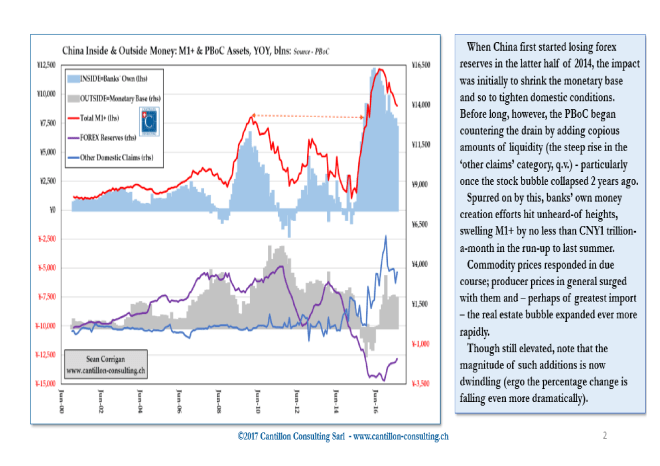
The chart and commentary below is taken from Sean Corrigan’s August newsletter – Cantillon Consulting – China: Is the tide turning?:-
China_Money_Supply_-_Cantillon_August_2017

Source: Cantillon Consulting

As Corrigan goes on to say:-

As the deceleration has progressed, the PMI has shown its expected downward response. In due course, company revenues – and ultimately profits – will follow if this is long maintained.

Greater recourse to receivables financing (funded partly by recourse to shadow finance) can delay full recognition of this awhile, but it cannot fail to impair either the magnitude or the quality of earnings as it works through the economy.

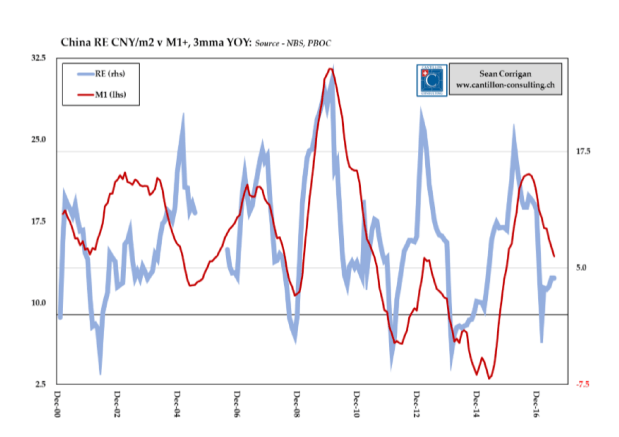
At the heart of the credit equation lies the Real Estate market:-
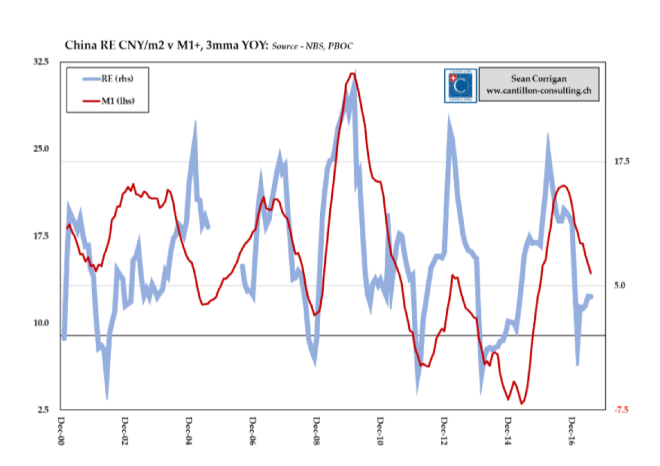
China_Real-Estate_and_M1_-_Cantillon_-_August_2017

Source: Cantillon Consulting

During 2016 property prices in China increased by 19%, new homes by 12.4%, the fastest since 2011, but the market has cooled of late due to government intervention to subdue its speculative excess. New-home prices, excluding government-subsidized housing, gained from the previous month in 56 of 70 cities in July, compared with 60 in June. New Home Sales for August were the weakest in three years at +3.8%, however, investment in Real Estate development increased 7.8% last month – this is hardly a collapse. House prices are still forecast to rise by 6.8% in 2017 with growth driven by continued increases in second and third tier cities:-
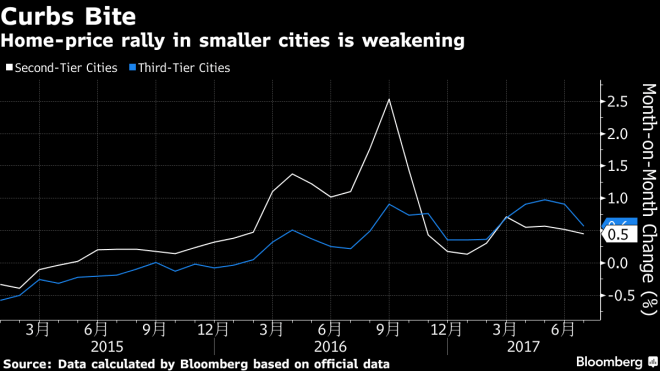
China house prices - 2nd and 3rd tier cities - Bloomberg

Source: Bloomberg

There are concerns that the property market may crash later this year but Chinese authorities seem to be cogniscent of this risk. They lifted restrictions on international bond sales in June, allowing cash strapped property developers to tap international markets. Bloomberg – Indebted China Developers Get Funding Relief as Bond Sales Soar – covers this story in greater detail.

With Real Estate contributing around 15% to GDP this more moderate pace of expansion is expected to temper the pace of growth for the second half of 2017. In Q2 GDP was estimated at 6.9%, the same level as Q1 – this puts nominal growth near to a five year high.

The tide appears to have turned; Industrial output, fixed investment and retail sales all slowed during the summer. Industrial output rose 6% in August, the weakest this year. Retail sales rose 10.1% down from 10.4% and 11% in July and June. Fixed-asset investment in urban areas was up 7.8% in the year to August, the slowest since 1999:-
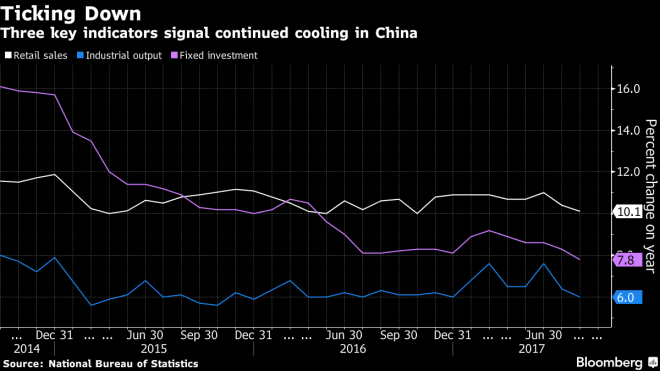
China growth indicators - Bloomberg

Source: Bloomberg

In a paper published at the end of August The Kansas City Federal Reserve – Has China’s Growth Reached a Turning Point? provide further support for expectations of a slowdown in Chinese growth. As they note, judging whether the recent rebound in China’s growth is temporary or more sustained, is a complex issue:-

The Chinese economy is undergoing a transition in which economic growth is rising in some sectors of the economy but declining in others. At the same time, China’s official quarterly GDP figures have been criticized for being overly smooth and less informative. Moreover, Chinese government policies have stimulated or cooled the economy at different times, further muddling the signal from economic data.

The authors construct a factor model but find that:-

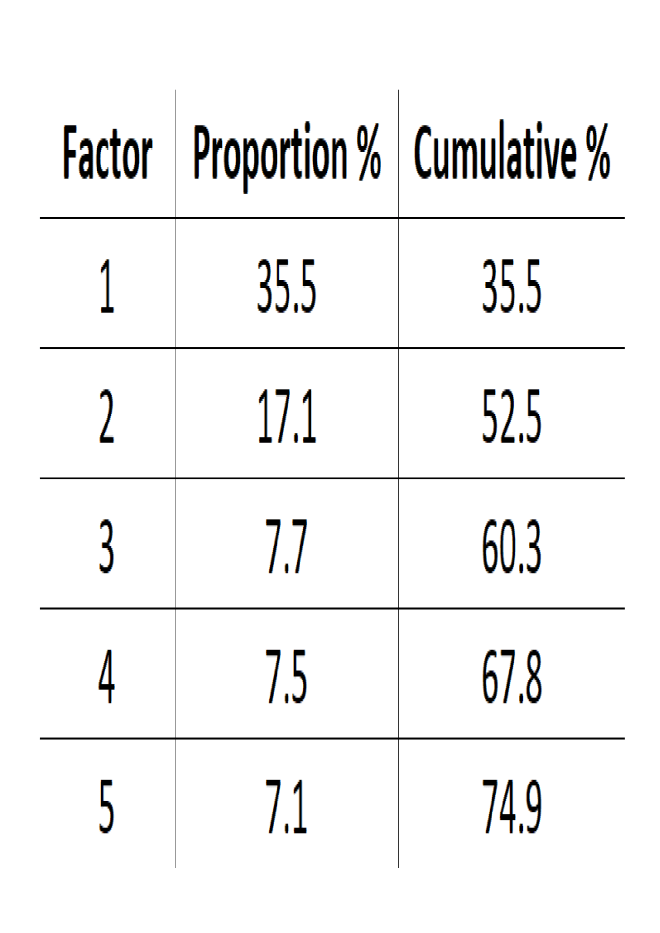
…no single common factor explains the majority of the variation in Chinese activity. This is consistent with the view that the Chinese economy is in a transition, so different sectors are less synchronized. Indeed, our analysis shows that the five most important factors together account for about 75 percent of the total variation in the selected Chinese data.

The heat-map matrix – darker colour = greater importance – is shown below (apologies for the poor resolution):-
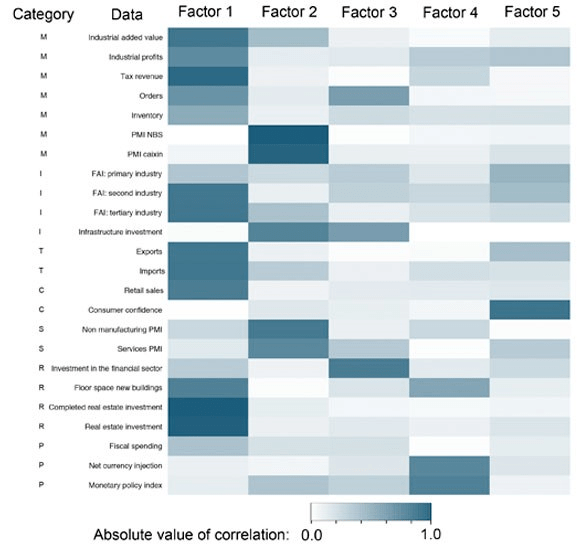
KCFR_Factor_model

Note: “M” corresponds to manufacturing, “I” corresponds to investment, “T” corresponds to trade, “C” corresponds to consumption, “S” corresponds to services, “R” corresponds to real estate and finance, and “P” corresponds to policy.

(Sources: Wind and authors’ calculations.)

Source: Kansas City Federal Reserve

Here are the weightings which the authors assigned to each factor and the cumulative total:-
KCFR_-_Factor_weights

Source: Kansas City Federal Reserve

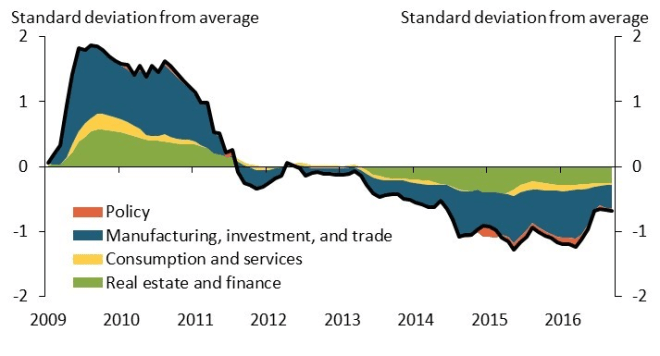
In conclusion the authors look in detail at the evolution of the drivers behind their principal factor – Factor 1:-
KCFR_Factor_1_breakdown

Source: Kansas City Federal Reserve

As China is transitioning from an investment- and export-driven economy to a more consumption-driven economy, the recent improvement in the manufacturing, investment, and trade group is likely to be temporary. Indeed, this improvement may reflect the rebound in global commodity prices that led to higher industrial profits and production; an increase in fiscal spending, which supported investment; and improvement in global growth coupled with the depreciation in the Chinese currency at the end of last year, which boosted Chinese exports. These driving forces may prove to be temporary, casting doubts on the sustainability of recent strength in the manufacturing, investment, and trade group.

This suggests that the increase in commodity demand outside China has led to increases in prices and that this has helped boost Chinese GDP growth.

Indian, an economy with a large enough GDP to tip the scales, has been slowing since Q1 2016 so the KCFR conclusion seems like the cart leading the horse, it’s little wonder they express it tentatively.

Which brings me to a recent article from Mauldin Economics – or, more accurately China Beige Book – China: Q2 Early Look Brief in which Leland Miller takes issue with the idea that Chinese growth has peaked, corporate deleveraging is the cause, and that the commodity sector is in slowdown mode.

Here’s an extract which gives a flavour of Miller’s contrarian perspective:-

Why Rebalance When You Can Have Both?

The second quarter saw minimal progress in moving away from manufacturing toward services leadership in the economy. This was an excellent failure, however, since services performed well and manufacturing almost as well. Manufacturing tapered but extended its powerful rally since the first half of 2016. Revenue, hiring, and new orders were all higher on-quarter and sharply higher on-year. Still, services outperformed manufacturing in revenue and profits. Hiring in services has been uneven, but Q2 was solid.

Commodities Surprises to the Upside.

Defying early signs of a slowdown, our biggest Q2 surprise was another robust performance in commodities. Make no mistake, the warning signs look like Times Square: the second quarter saw huge across-the-board jumps in inventory, sliding sales price growth in three of four sub-sectors, and rising input costs. Yet, more firms again saw rising sales prices than input cost hikes, sales volumes accelerated, and cash flow moved from red to black, bolstering balance sheets.

Away from Markets’ Gaze, Aluminum Shines.

Commodities’ unsung hero: aluminum. CBB data show aluminum firms wildly outperforming the current market narrative, seeing broad Q2 gains in revenues, profits, volumes, output, and new orders, as well as cash flow, which jumped into the black for the first time in our survey’s history. The why is less clear than the what, but one obvious possibility is aluminum is the latest recipient of some of China’s excess liquidity. The #moneyball may have struck again.

Miller goes on to admit that Real Estate has slowed, credit conditions have deteriorated (outside the property space) and inventories in manufacturing, retail, and commodities hit all-time highs. By one estimate China’s unused steel capacity equals the output of Japan, India, America and Russia combined. Personally I only take issue with Miller’s spelling of aluminium!

China Beige Book remain more optimistic than the majority of commentators but they end their review on a note of caution:-

China’s attempt at deleveraging has been discussed to no end, but its implications are not well understood. In Q1, corporate reporting to CBB showed credit tightening was limited to interbank markets. In Q2, it hit firms: bond yields and rates at shadow banks touched the highest levels in the history of our survey, and bank rates their highest since 2014. So why did borrowing not collapse, denting the broader economy? One reason is what we call the “Party Congress Put.” While borrowing did see a mild drop for the third straight quarter, companies’ six-month revenue expectations remain robust in every sector save property. Companies assume deleveraging is transient, likely because they are skeptical the Party will allow economic pain in 2017. It will not be until 2018 when we find out whether deleveraging is genuine – because it won’t be until 2018 that it will actually hurt.

This brings me back to the question, what caused the initial increase in commodity prices? Part of the impetus behind the rise has been a deliberate curtailing of supply by the Chinese authorities, however, investors should be wary of equating a rise in prices with a sustainable recovery in demand. The Economist – Making sense of capacity cuts in China described it thus:-

Stockmarkets have been on a tear over the past 18 months. Shares are, on average, up by a third globally. Commodities have rallied. And the optimism has infected corporate treasurers, who, for the first time in five years, are spending more on new buildings and equipment. Plenty of factors have fed into the upturn, from Europe’s recovery to early hopes for the Trump presidency. But its origins date back to a commitment by China to demolish steel mills and shut coal mines.

On the face of it, that is an unlikely spark for a change in sentiment. Normally, growth comes from the investment in new facilities, not the closure of those in use. In fact, China’s case is a rare one. By taking on extreme overcapacity, its cutbacks have provided a boost, for itself and for the global economy. The risk, however, is that the way the country is going about the cuts both disguises old flaws and creates new ones.

In early 2016 China announced plans to reduce steel and coal capacity by at least 10% over five years – equivalent to around 5% of global supply. By 2020 they aim to reduce coal output by 800m tonnes – 25% of Chinese production. Steel capacity is set to be slashed by 100m-150m tonnes – 20% of total output – and aluminium, by 30%.

This is not the first time China has attempted to manipulate global commodity markets, yet previous forays disappointed. This time it’s different – a dangerous phrase indeed! Higher prices for steel are likely to encourage domestic investment in new supply. Iron Ore stocks at Chinese ports have reached record levels. Meanwhile the underlying problem – oversupply – has not been addressed. Signs of a roll-back in policy are already evident in the coal industry, where mines which had their production capped at 276 days in 2016, have been permitted to revert to 330 days production this year.

Conclusion and Investment Opportunities

Returning to my original question – is Chinese growth about to falter? In his recent article for the Carnegie Endowment – Is China’s Economy Growing as Fast as China’s GDP? Michael Pettis writes:-

… I would argue that “the end of China’s stellar growth story” has already occurred, and occurred quite a long time ago. Growth in the Chinese economy has collapsed, but growth in economic activity has not collapsed (let us assume, with Grenville, that somehow the reduction in GDP growth from over 10 percent to 6.5 percent does not represent a slowdown in economic activity). The growth in economic activity has instead been propped up by the acceleration in credit growth and by the failure to write down investments that have created economic activity without having created economic value. In that case, high GDP growth levels simply disguise the seeming collapse of underlying economic growth in a way that has happened many times before—always in the late stages of similar apparent investment-driven growth miracles.

The question which springs from Pettis’s article is, when will the non-performing investments be written off? Given the relatively modest government debt to GDP ratio in China (69%) there is still scope to postpone the day of reckoning, but in the shorter-term, trade tensions with the US and a certain reticence on the part of major Central Banks to embrace infinite QE, risks interrupting the current rebound in global growth over the next two years.

The IMF WEO – July 2017 update left global forecasts for global GDP growth unchanged at 3.5% for 2017 and 3.6% for 2018, but their forecasts for China were revised higher by 0.1% and 0.2% respectively. The increasing levels of debt, inventory build and buoyancy of the Real Estate sector may be sufficient for China to avoid a slow-down in GDP growth, but this will be the result of a further inflating of their debt bubble.

Chinese stocks, which continue to trade on single digit P/E ratios, look inexpensive, but this is how they almost always look. Chinese government 10yr bond yields have risen by more than 1% since October 2016 to 3.67% (14-9-2017). Despite the rhetoric emanating from Washington DC, the RMB has retraced much of the ground it lost during 2016 – since January the RMB has strengthened by 4.7% against the greenback.

An economic slowdown in China will prompt the authorities to provide liquidity, this in turn should feed through to lower interest rates, which in turn will help to support domestic stocks. US pressure, such as economic sanctions or the imposition of regulatory constraints, is likely to lead to a renewed weakening of the Chinese currency. A process lower domestic bond yields will help to accelerate. Chinese equities remain in a technical up-trend, as does the currency, while the direction of bond yields is upward as well. This favours remaining; long stocks, short bonds and long the RMB.

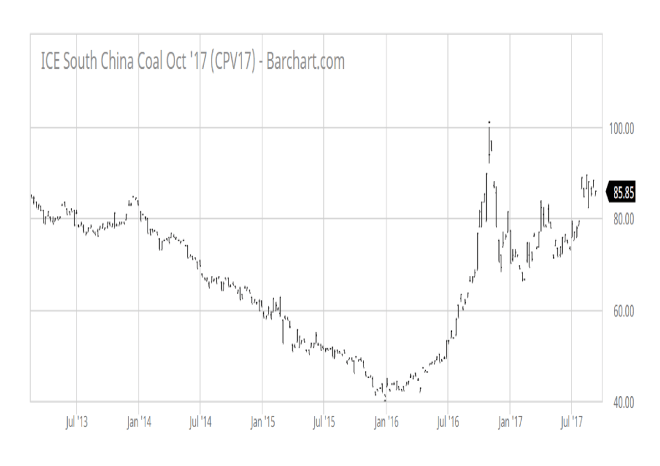
When might things change? It is difficult to forecast – I am a trend follower by inclination. The, possibly apocryphal phrase, attributed to Keynes, that ‘The markets can remain irrational longer than I can remain solvent,’ is etched firmly on my heart. The Chinese edict limiting coal production was, perhaps, the catalyst for present rally. I prefer to trade leaders rather than laggards and will therefore be watching the price of Chinese coal closely. Below is the five year chart:-
ICE_South_China_Coal_-_5yr

Source: Barchart.com

There is room for a downward correction – to fill a technical gap – but I see no reason to sell industrial commodities on the basis of this price pattern. Notwithstanding Pettis’s more nuanced view, I believe growth, as we understand it on a month to month basis, may slow. If it occurs the slowdown will be gradual, moderate and, if the government intervenes, might be deferred: though, in the long run, not indefinitely.

Does the rising price of industrial metals herald the beginning of the next commodity super-cycle?

Does the rising price of industrial metals herald the beginning of the next commodity super-cycle?

400dpiLogo

Macro Letter – No 82 – 01-09-2017

Does the rising price of industrial metals herald the beginning of the next commodity super-cycle?

  • Industrial Metals have been rising sharply during the last quarter
  • Global economic growth remains muted but is accelerating in emerging markets
  • Capital Expenditure in the mining sector has been weak leading to supply constraints
  • A short-term cyclical recovery seems more likely than the beginning of a new super-cycle

Super-cycle theory

In a 2012 paper for the United Nations/DESA – Super-cycles of commodity prices since the mid-nineteenth century – Bilge Erten and José Antonio Ocampo review the literature on the theory of Commodity Super-Cycles and go on to suggest that the current cycle began in 1999. Here is an extract from their concluding remarks:-

The decomposition of real commodity prices based on the BP filtering technique provides evidence of four past super-cycles ranging between 30 to 40 years. For the total real non-fuel commodities, these cycles have occurred (1) from 1894 to 1932, peaking in 1917, (2) from 1932 to 1971, peaking in 1951, (3) from 1971 to 1999, peaking in 1973, and (4) the post-2000 episode that is still ongoing. These long cycles, which possess large amplitudes varying between 20 to 40 percent higher or lower than the long-run trend, are also a characteristic of sub-indices. Among the agricultural indices, the tropical agriculture exhibits super-cycles with much larger amplitude relative to non-tropical agriculture. The amplitudes of super-cycle components of real metal and crude oil prices are comparable to those of agricultural products in earlier parts of the twentieth century, but they become much more pronounced and strong in the latter parts of the century. The presence of co-movement among non-fuel commodity indices is supported by the correlation analysis across the entire sample, and a marked co-movement between oil and non-oil indices is present for the second half of the twentieth century.

Another important finding of the paper is that, for non-oil commodities, the mean of each supercycle has a tendency to be lower than that of the previous cycle, suggesting a step-wise deterioration over the entire period in support of the Prebisch-Singer hypothesis*. This finding applies especially to tropical and non-tropical agricultural prices, as well as metals in previous cycles. An exception to this rule is that of metals during the current super-cycle, when the mean last cycle is higher than the preceding one; however, the contraction phase of this cycle has not even began yet, which can lower the mean of the whole cycle in the upcoming years. Another way of capturing these trends is through long-term trends, with tropical agricultural prices experiencing a long severe long-term downward trend through most of the twentieth century, followed by non-tropical agriculture and metals. The duration of the long-term downward trends across all non-fuel commodity groups is on average 100 years. The magnitude of cumulative decline during the downward trend is 47 percent for the non-fuel commodity prices, with recent increases of around 8 percent far from compensating for this long-term cumulative deterioration. In contrast to these trends in non-oil commodity prices, real oil prices have experienced a long-term upward trend, which was only interrupted temporarily during some four decades of the twentieth century.

The recent commodity price hike of the early twenty-first century has commonly been attributed to the strong global growth performance by the BRIC economies, and particularly China, which is particularly metal- and energy-intensive. Based on the VECM results, it is found that super-cycles in the world output level are a good predictor of the super-cycles in real non-fuel commodity prices, both for the total index and sub-indices. This finding confirms that the global output accelerations play a major role in driving the commodity price hikes over the medium run. Therefore, the ongoing commodity price boom could last only if China and other major developing countries are capable of delinking from the long period of slow growth expected in the developed countries.

* Prebisch-Singer hypothesis – suggests that over the long run the price of primary goods such as commodities declines in proportion to manufactured goods.

What is clear from this research is that commodities are far from homogeneous. A strong trend in industrial metals may not coincide with a strong trend in tropical soft commodities or North American grains. Nonetheless, the idea of the super-cycle is beguiling, because it ties the demand for all commodities to economic growth. The Russian economist Nikolai Kondratiev (1892-1938) developed a theory of Long Waves in the early 1920’s. He discarded exogenous factors, such as wars and revolutions, in favour of endogenous drivers, like technological advances and capital accumulation. The Austrian economist Joseph Schumpeter took these ideas further, developing his theory of ‘Creative Destruction’.

From Theory to Practice

Enough of the theory, where are we now? To answer this I will start with one of my favourite charts, one which regular readers have seen before:-

Economist_Commodity_Index_-_Inflation_adjusted_185

Source: Economist

This chart shows commodity prices between 1850 and 2005, adjusted for inflation. Schumpeter’s theory of Creative Destruction looks compelling; periods of high commodity prices spur innovation which leads to a lowering of prices in response to productivity gains.

Since 2008 the Bloomberg Commodity Index has weakened:-

Bloomberg_Commodity_Index_-_Jan_1999_-_Aug_2017

Source: Bloomberg, Financial Times

The above chart – which is not inflation adjusted – shows the current commodity super-cycle since January 1999. The meteoric rise, the impact of the Great Recession of 2008-2009, the subsequent rebound, as QE kicked-in, and the continuation of the downward trend, marking a complete retracement of the upward move from 1999 to 2008, are all clearly evident. Now a number of commodities have begun to rise simultaneously.

Has the period of creative destruction run its course and permanently reduced supply? Or is the current rebound merely a shorter-term correction which, through higher prices, will encourage new capital investment in productivity enhancing techniques which will rapidly lower those prices once more – 17 years, after all, would make this the shortest super-cycle to date? To answer these questions we need to consider the state of the world economy, especially the growth potential of emerging and developing countries.

The Global Economy and Commodity Demand

Global economic growth has been muted during the past decade. The chart below shows World GDP growth from 1999 to 2015:-

world-gdp-growth-annual-percent-wb-data - 1999-2015

Source: Trading Economics, World Bank

Recent data – and forecasts – from the IMF, suggest that drivers of global growth are changing. Here is an extract from the IMF WEO for July:-

The pickup in global growth anticipated in the April World Economic Outlook remains on track, with global output projected to grow by 3.5 percent in 2017 and 3.6 percent in 2018. The unchanged global growth projections mask somewhat different contributions at the country level. U.S. growth projections are lower than in April, primarily reflecting the assumption that fiscal policy will be less expansionary going forward than previously anticipated. Growth has been revised up for Japan and especially the euro area, where positive surprises to activity in late 2016 and early 2017 point to solid momentum. China’s growth projections have also been revised up, reflecting a strong first quarter of 2017 and expectations of continued fiscal support. Inflation in advanced economies remains subdued and generally below targets; it has also been declining in several emerging economies, such as Brazil, India, and Russia.

The IMF goes on to opine that, despite the stable outlook for 2017/2018, global growth remains below pre-crisis levels for the majority of advanced economies and, more importantly, for commodity-exporting emerging and developing countries. These tentative conditions seem unlikely to favour the beginning of a sustained upswing in commodity prices, nonetheless, prices, especially for industrial metals, have shown impulsive strength. The chart below compares the Bloomberg Commodity sub-indices over the past year, industrial metals appear to be the only game in town:-

Bloomber Indices 1yr Aug 2017

Source: Bloomberg  

Even these sub-indices mask some individual trends. Palladium, a constituent of the precious metals index, made a 16 year high at $945/oz. on 29th August – up 122% from its January 2016 low. Lesser known PGMs, Ruthenium and Rhodium are both up more than 60% in the nine months to May 2017. Copper, the bellwether of industrial metals tested $3.08/lb, its highest since October 2014. LME 3 month Aluminium traded $2,121.75/ton, the highest since February 2013 and 3 month Zinc traded $3,179.50/ton, its highest level for a decade.

Mining companies have rallied in the wake of these higher prices. Market commentators argue that a combination of tight supply and increased demand, especially from China – whose growth forecast was revised from 6.2% to 6.7% by the IMF last month – are the principal near-term factors behind the rally. Additional factors include the relative weakness of the US$ and a, widely anticipated, more hawkish, central bank stance on interest rates.

A fascinating analysis on the relationship between Chinese growth and commodity prices is contained in this article from Jodie Gunzberg of S&P – Chinese Demand Growth Lifts Every Commodity:-

Overall the S&P GSCI only moves in the same direction as Chinese GDP growth changes in about 57% or 26 of 46 years. However, when the Chinese GDP growth is split into rising and falling periods, commodity returns seem to be more influenced by rising growth than slowing growth.  Of the 46 years, growth rose 19 times with 15 or 79% positive annual commodity returns.  The slowing growth years were much less influential, driving down commodity performance in only 11 of 27 years, or in 41% of time.  Though, big negative years like in 1976, 1981, 1986, 2008, and times with consecutive years of falling growth like in 1997-98, 2013-15 seemed to bring commodities down.

Ms Gunzberg goes on to look at the breakdown by sub-sector, finding that only Livestock and Agricultural commodities which fall in response to a decline in Chinese GDP growth. The table below, which drills down to the behaviour of individual commodities, is particularly instructive:-

China_and_Commodities_-_SandP_Dow_Jones

Source: S&P Dow Jones Indices

Some industrial metals, such as Lithium – used in the manufacture of lightweight car batteries – have seen a dramatic increase in underlying demand. It has risen from a low of $62/ton in February 2016 to $122/ton this week. However, an entire range of other industrial metals has also witnessed rising prices over the past 12 months:-

Industrial_Metals_Table_-_1yr_-_source_Trading_Eco

Source: Trading Economics, Infomine

In an attempt to answer my initial question I quote from PWC – Mine 2017 – Stop, Think…Act

Stop

In 2016, traditional players continued balance sheet bolstering to calm the market and stop the angst associated with financial distress. A heavy emphasis was placed on shedding debt. The brakes were firmly applied to exploration activities which continued to shrink, and what little was undertaken was generally allocated to “safe” jurisdictions. Capex fell dramatically again, by a further 41 percent, to a new record low of just $50 billion, and there was a lack of significant greenfield projects announced or commenced. Production was generally flat. While the Top 40 faced external headwinds in the form of increased oil prices, prudent cost control measures ensured operating expenditure was constrained. Traditional miners were rewarded with a strong upswing in their market cap, and earned some breathing space. Many planned disposals were called off in response to better market conditions. The exception to this was the 11 Chinese companies within the Top 40. China defied conventional industry behaviour and invested at the bottom of the cycle. Indeed, the most significant asset buyers among the Top 40 were Chinese companies.

Think

In the short term, shareholders may appreciate the strengthening of balance sheets and increases in share prices. But the industry will need to execute a longer term vision or it will remain at the mercy of commodities speculators. Shareholders will demand performance from the existing asset base, culminating in dividends, or they will simply reallocate their capital if the mining sector cannot provide a long-term growth vision. There is clearly a divergence in thinking between Chinese companies and the rest of the Top 40 as their goals are different and Chinese capital is more patient. China aside, the old guard have donned hard hats, high viz jackets and steel-capped boots in a bid to protect themselves from the pitfalls of the recent past. Praise should be given for the efforts to repay debt, innovate and adopt new efficiency measures – all of which have helped to curb costs and restore credit ratings and investor trust. But where will this thinking take the industry if a “playing it safe” attitude to investment prevails in the future? We argue that it will lead back to old habits of lavish spending in a boom followed by a wave of write-offs during the bust that inevitably follows.

Act

Balance sheet clean-ups require discipline and much hard work has been done. We witnessed the tailing-off of impairments, the avoidance of any new bankruptcies, the absence of any significant streaming transactions and the general passing of distress. The market rightly applauded this, reinstating a positive gap between market caps and net book values that was absent in 2015. Healthier price-to-earnings (P/E) multiples returned. And, even as price growth slowed early this year, valuations continued to rise until April. This provides a platform for the industry to act into the future. What we failed to see was significant action on the future direction of the Top 40, at least by the traditional players. We’ve called the industry out in the past for reacting to short-term price movements, and thankfully this did not happen in 2016. Is the pause an indication of longer term thinking by the industry? One major (Rio Tinto) may think so. Recognising the long-term, cyclical nature of the industry, it has publicly stated that its new CEO has a “10-year mandate…Emerging market companies, who are also focused on new world minerals, are increasingly integrated. In the traditional markets, we are seeing new players seeking to secure supply and even calls by stakeholders for BHP to get on board the battery train. It remains to be seen if a major will pivot in this direction. What will be the results of this reflection for the remainder of 2017? Will action come in the form of investment in greenfield projects, M&A or technology? The latter, we think, simply cannot be ignored. Aside from the completion of new projects, none of the majors has signalled bold intentions for future growth. But who could blame them when early 2017 has heralded further volatility in prices and the subsequent reversal of some of the 2016 gains. Few things are certain in this industry, but we know that China is unwavering in its strategy, shareholder activism is rising, government interventions are becoming more commonplace and new players are disruptive. Will the industry also act, or simply react?

Conclusion and Investment Opportunities

It is too early to predict the beginning of a new up-trend in the next commodity super-cycle, however, mining companies, outside of China, have reduced capital expenditure over the last few years and, given the long lead times in the mining industry, the current uptrend in prices is probably a function of supply constraints, emanating from a lack of investment, combined with a marginal increase in global demand. I believe, however, that this trend can continue for some while. Inflation in the US and Europe remains subdued, deflation remains a near and present danger in Japan; therefore the major Central Banks are likely to maintain a low interest rate regime. The current long economic expansion will continue for a while yet.

During the last major uptrend in commodity prices, China was the main source of additional demand. Since announcing their 12th Five Year Plan in March 2011, China has adopted a policy of ‘Rebalancing’ towards domestic demand, away from mercantilist export oriented growth. Under this new regime, the services sector should expand faster than manufacturing and demand for raw materials, such as industrial commodities, should decline structurally. July saw the publication of a new paper from the IMF – Financial Development Resource Curse in Resource-Rich Countries: The Role of Commodity Price Shocks – it develops some of the ideas contained in the Prebisch-Singer hypothesis. I suspect the Chinese authorities have known the advantage of diversifying their economy away from basic materials from many years. Barring a significant increase in demand from other emerging and developing economies, such as India, the current up-trend in industrial metals is likely to be relatively short-lived, another year to 18 months should see new capital expenditure deliver increased supply. Prices will diminish.

Individual industrial commodities, such as Cobalt and Lithium, will see higher prices, even from their current elevated levels, due to structural demand increases. Other industrial commodities will be more likely to revert to mean as new supply meets global demand over the next couple of years.

Has Bitcoin come of age?

Has Bitcoin come of age?

400dpiLogo

Macro Letter – No 81 – 21-07-2017

Has Bitcoin come of age?

  • Bitcoin (BTC) has tripled and then halved since late March
  • Even at BTCUSD 2000 total issuance amounts to $33bln
  • Historic volatility is high (80%) but implied volatility is higher (97%)
  • The introduction of derivatives and an interest rate curve suggest financial deepening

Bitcoin (BTC) came into existence in January 2009. It was not the first ‘cryptocurrecny’ and there are now an estimated 950 competitors, with new ICO’s ‘Initial Coin Offerings’ appearing almost daily.

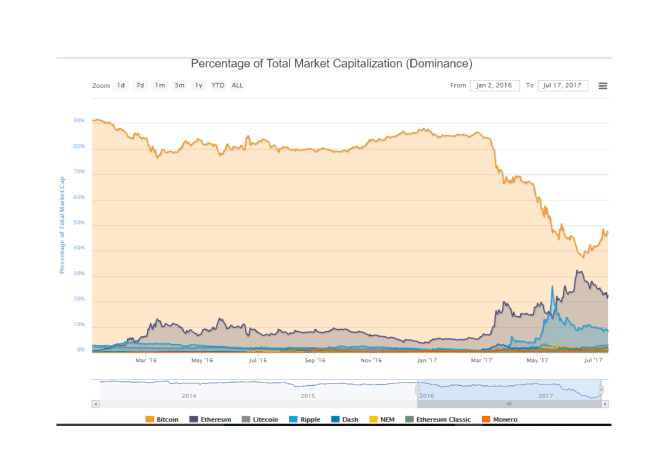
BTC’s closest rival in terms of coins in circulation is Ethereum (ETH). The chart below shows how these currencies % of total market capitalisations has waxed and waned:-

Cryptocurrency_Market_Cap_-_Coinmarketcap_com

Source: coinmarketcap.com

I want to concentrate on BTC since it remains the market leader with a total circulation of $33bln (reference BTCUSD 2000) whilst the outstanding issuance of its nearest rival ETH is $16bln.

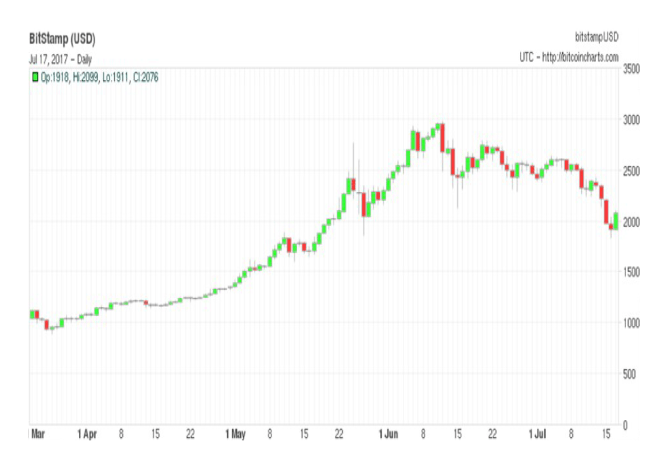
Below is a four month chart of BTCUSD, its price has fallen by almost one third in just over a month:-

Bitcoin_chart_since_March_2017_-_Bitcoincharts_com

Source: Bitcoincharts.com

The recent price action needs to be seen in a broader context. The price has increased from less than BTCUSD 1000 in late March. On April 1st the Japanese authorities officially recognised BTC for the first time: perhaps, this was the catalyst for its spectacular rise.

The subsequent precipitous decline in price may be related to a proposed software change to be introduced on 21st July, known as SegWit, which is discussed in Cryptocurrency Value: Growing Pains or Something More? By Ryan Shea – here’s the rub:-

SegWit2x software, which introduces SegWit while doubling the block size to 2MB, will be released on July 21. More than 80% of the network hash rate has agreed to run the SegWit2x code, which suggests that the solution to increasing bitcoin’s scalability will be enacted smoothly.

However, it is also possible that the hard fork required to increase the block size leads to a bifurcation of bitcoin into two separate currencies –something that would unquestionably trigger a sharp price correction by undermining the bitcoin brand. (The key date by which a split can be avoided is August 1 when BIP148 activates – this represents the last opportunity for miners to accept Segwit2x and thereby avoid a chain split resulting in the creation of two parallel bitcoins.)

There have been victories and defeats during the evolution of BTC, as it has evolved from an obscure novelty to a serious contender for investors seeking a store of value. The price volatility reflects these uncertainties but it is not demonstrably different from the volatility seen in several commodity markets.

Financial deepening

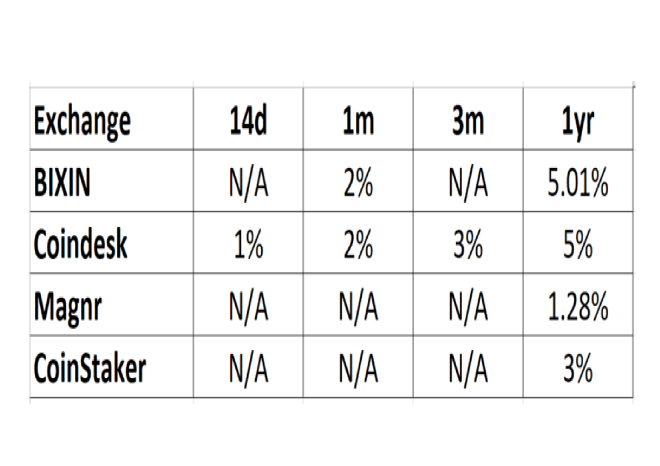
For a security, commodity or a currency to gain credence, among financial market operators, it needs to offer a store of value, liquidity and convertibility. If can achieve these attributes it should have collateral value, by which I mean, BTC should be capable of being borrowed or lent. This is already happening. Some cryptocurrency exchanges are offering a rate of interest on term deposits and others offer the opportunity for holders of BTC to lend their currency to traders who wish to borrow it, primarily to sell the currency short. Whilst there is not really a ‘risk-free rate’ for BTC an interest rate term structure is beginning to emerge as the table below, derived from a number of exchanges, shows:-

Bitcoin_Interest_Rates_-_July_2017

There may well be other exchanges offering a variety of differing interest rates. but this, I hope, provides a snapshot of the current environment.

The other aspect of financial deepening which will help BTC come of age is the development of a derivatives market. I believe the arrival of exchanges for BTC futures and options is a very positive signal.

The futures exchanges include Okex, CryptoFacilties, BitMEX, BitVC, Coinut and Deribit which also offers options – there may be several others. Today (Monday 17th July) I have taken some snap shots of the futures and options pricing from Deribit.

With the BTCUSD spot price at 2027, the July future (expiration 28th July) traded at a discount of $12 ($2015) this is known in futures parlance as a backwardation. The September contract (expiration 29th September) was, by contrast, trading at a premium, or contango ($2070). Because of high demand from leveraged traders to borrow US$ to buy BTC the forward/futures price of BTCUSD normally trades at a premium (contango). The current environment is unusual, the forced liquidation which has fuelled the recent collapse in the price has led to, what is likely to be a temporary, backwardation. John Jansen – CEO of Deribit – explained the anomaly during a recent interview:-

…when the market is bullish, US$ interest rates spike up and BTC interest rates go down: uses want to borrow USD to buy BTC. In other words, short USD and go long BTC…there is an overall tendency for speculators to be long, therefore, the arbitrage traders are short BTC (lending out their USD) or short the future. USD interest rates are, therefore, normally higher than BTC rates which explains the contango in BTCUSD futures prices.

…on BTC platforms, annualized interest rates on US$ are on average maybe 20%…which would imply that the future should trade at a 20% annualized contango. Arbitrage traders take the other side of the trade…but get paid for their trouble.

Over time I expect the BTC market to become more efficient and the natural relationship for BTC futures should (other things equal) eventually become a small backwardation, reflecting the 1.5% differential between lower US$ and higher BTC interest rates. There are a number of arbitrage opportunities for those who want to dig deeper, but remember credit risk, both in terms of counterparties and exchanges, together with risks surrounding convertibility are nuanced. It may not be the free-lunch you perceive it to be.

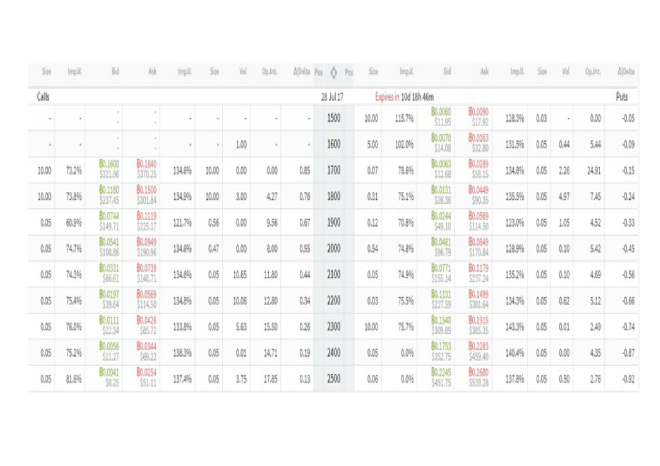
This brings me to the BTC option market. The prices in the table below are again from Deribit:-

Deribit_-_Bitcoin_Options_prices_-_17-7-2017_-_Spo (1)

Source: Deribit

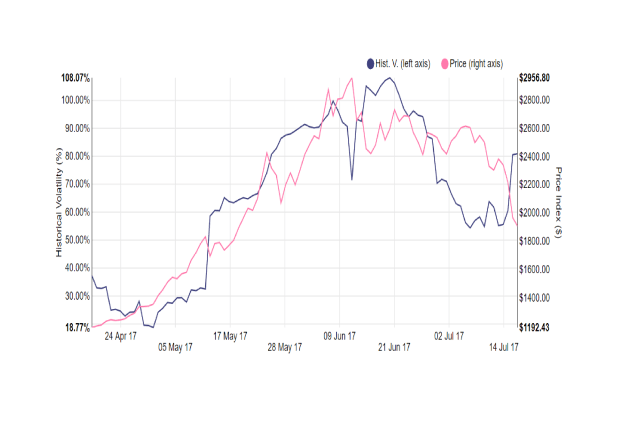
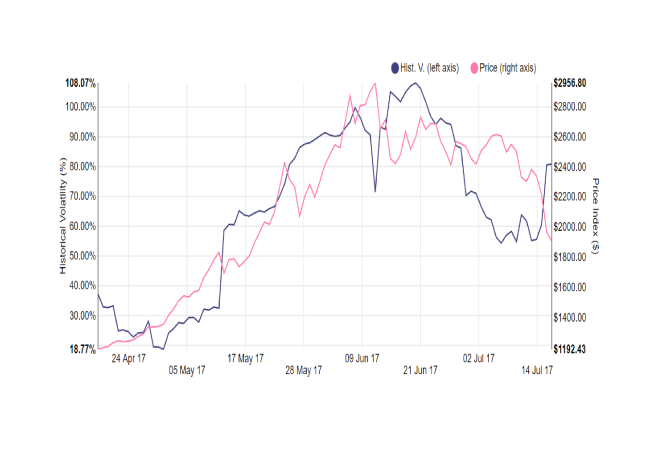
I regret the resolution this table is less than I’d like but it shows some important features. Firstly, implied volatility is trading at a substantial premium to historic volatility. The chart below shows the evolution of historic volatility and the BTC price over the last three months:-

Bitcion_price_and_vol_3month_-_Deribit

Source: Deribit

The July option series expires on 28th but the mid-market implied volatility for the September 29th expiration is not significantly lower – implied call volatility stands at 97%, for puts it is 85%. At this stage in the development of the BTC options market, I suspect the majority of the buyers are speculative traders rather than desperate hedgers, but option market-makers are wise to build in a margin of safety given the tendency of the underlying market price to gap lower or higher: delta and gamma hedging is challenging with these price swings. The bid/offer spreads on the options are also wide, another reflection of the nascent nature of the marketplace.

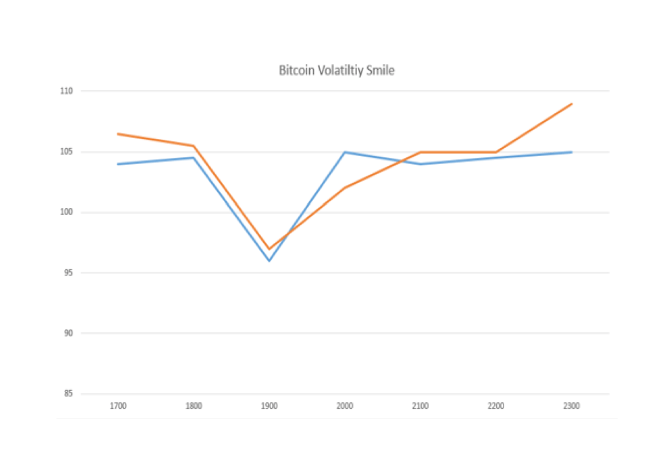
A final measure of immaturity – or perhaps I should say, opportunity – which the option market reveals, may be found in the shape of the volatility surface. The chart below is extrapolated from the mid-market implied volatilities in the table above:-

Bitcoin_Options_Vol_Smile_-_Deribit

Source: Deribit

In a liquid options market one would normally expect the lowest implied volatility to be at-the-money – around the $2000 strike price. In the chart above the nadir of volatility is around the $1900 strike, a level breached briefly last weekend.

Conclusions and investment opportunities

Cryptocurrencies have captured the imagination of many new participants, from geeks to gold bugs, but, as BTC achieves greater legitimacy, the market will deepen and mature. The adoption of scalable technology to deal with the exponential increases in trading volume is a part of this process. The acceptance of distributed ledger technology across other parts of the financial services sector will also be supportive.

From a technical perspective the price of BTC has corrected by around 50% – since March it has risen from under $1000 to $3000 and is now back around $2000 (Monday 17th July). In absolute terms it has fallen by just over one third. This is a healthy price correction, typical of the price action witnessed from time to time in more liquid and established commodity markets: US Natural Gas springs to mind.

As an investment, the argument for holding BTC is more tenuous. It is a currency with no government or central bank to underwrite its value, however, the expansion of the BTC monetary base is strictly controlled, making it more like a hard currency, such as we had during the Bretton Woods era, as opposed to the endlessly debased fiat currencies we are inveigled to consider of value today.

Currencies have no implicit yield but BTCUSD currently offers a theoretical positive carry of around 1.5%. As mentioned above, this relationship is currently distorted by the demand to borrow US$ to buy BTC by leveraged traders. Any investment in an asset which has no earnings and pays no dividend/coupon/interest must by its nature be a trading asset. However, strategies such as high frequency, robotic, liquidity provision and long term, trend following, are among a number of exciting trading opportunities for the active BTC operator.

The fundamentals driving BTC investment revolve around: investor distrust in fiat currencies, loathing of government intervention in asset markets and belief in the tenability of cryptocurrencies as a lasting store of value both from a technical and regulatory perspective. These fundamental drivers of valuation have, in the past and will in the future, cause sudden repricing’s. Outside of these seismic episodes, the price of BTC will be driven by capital flows. With liquid currency pairs like EURUSD, the economic fundamentals of both geographic regions are of equal importance. This is unlikely to be the case for BTC for the foreseeable future. BTC volatility eclipses the majority of its developed currency peers; its true value, whilst it is becoming gradually clearer, will remain ephemeral for some time to come.

The gritty potential of Fire Ice – Saviour or Scourge?

The gritty potential of Fire Ice – Saviour or Scourge?

400dpiLogo

Macro Letter – No 80 – 30-06-2017

The gritty potential of Fire Ice – Saviour or Scourge?

  • Estimates of Methane Hydrate reserves vary from 10,000 to 100,000 TCF
  • 100,000 TCF of Methane Hydrate could meet global gas demand for 800 years
  • Cost of extraction is currently above $20/mln BTUs but may soon fall rapidly
  • Japan METI estimate production costs falling to $7/mln BTUs over the next 20 years

On June 6th Japan’s Ministry of Economy, Trade and Industry (METI) announced the Resumption of the Gas Production Test under the Second Offshore Methane Hydrate Production Test this is what they said:-

Concerning the second offshore methane hydrate production test, since May 4, 2017, ANRE has been advancing a gas production test in the offshore sea area along Atsumi Peninsula to Shima Peninsula (Daini Atsumi Knoll) using the Deep Sea Drilling Vessel “Chikyu.” However, on May 15, 2017, it decided to suspend the test due to a significant amount of sand entering a gas production well.

In response, ANRE advanced an operation for switching the gas production wells from the first one to the second one for which a different preventive measure against sand entry is in place. Following this effort, on May 31, 2017, it began a depressurization operation and, on June 5, 2017, confirmed the production of gas.

Sand flowing into the well samples has been a gritty problem for the Agency for Natural Resources and Energy – ANRE since 2013. They continue to invest because Japan relies on imports for the majority of its energy needs, especially since the reduction in nuclear capacity after the Tōhoku earthquake and tsunami in 2011. It has been in the vanguard of research into the commercial extraction of Methane Hydrate or ‘Fire Ice’ as it is more prosaically known.

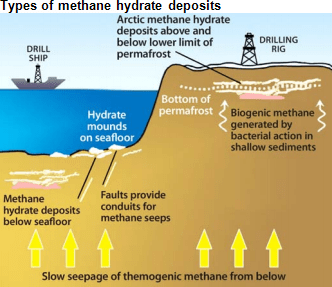
Methane hydrates are solid ice-like crystals formed from a mixture of methane and water at specific pressure in the deep ocean or at low temperature closer to the surface in permafrost. For a primer on Methane Hydrate and its potential, this November 2012 article from the EIA – Potential of gas hydrates is great, but practical development is far off – may be instructive but a picture is worth a thousand words:-

Methane Hydrate diagram - EIA

Source: US Department of Energy

During the last two months there have been some important developments. Firstly the successful extraction of gas by the Japanese, albeit, they have run into the problem of sand getting into the pipes again, which poses an environmental risk. Secondly China has successfully extracted gas from Methane Hydrate deposits in the South China Sea. This article from the BBC – China claims breakthrough in mining ‘flammable ice’ provides more detail. The Chinese began investment in Fire Ice back in 2006, committing $100mln, not far behind the investment commitments of Japan.

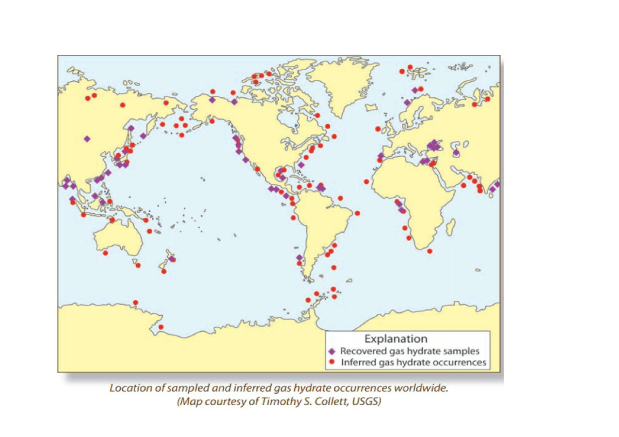
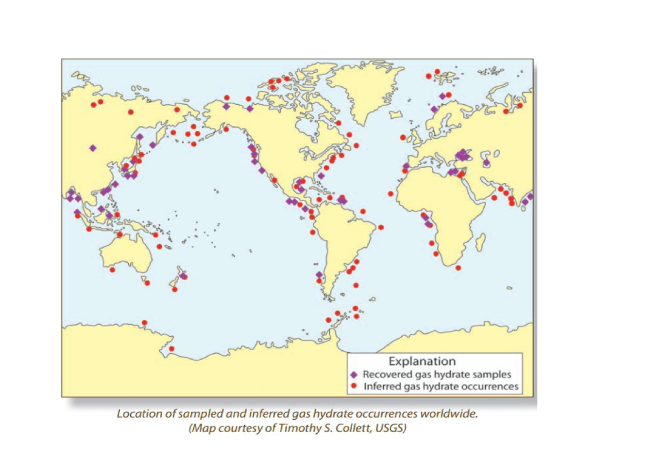
Japan and China are not alone in possessing Methane Hydrate deposits. The map below, which was produced by the US Geological Survey, shows the global distribution of deposits:-

Methane_Hydrate_deposits_-_USGS_-_2011

Source: US Geological Survey

For countries such as Japan, South Korea and India, Methane Hydrate could transform their circumstances, especially in terms of energy security.

Estimates of global reserves of Methane Hydrate range from 10,000 to 100,000trln cubic feet (TCF). In 2015 the global demand for natural gas was 124bln cubic feet. Even at the lower estimate that is 80 years of global supply at current rates of consumption. This could be a game changer for the energy industry.

The challenge is to extract Methane Hydrate efficiently and competitively. Oceanic deposits are normally found at depths of around 1500 metres. Even estimating the size of deposits is difficult in these locations. Alaskan and Siberian permafrost reserves are more easily assessed.
Japan has spent $179mln on research and development but last week METI announced that they would now work in partnership with the US and India. The Nikkei – Japan joining with US, India to tap undersea ‘fire ice’ described it in these terms, the emphasis is mine:-

Under the new plan, Japan will end its lone efforts and pursue cooperation with others. The country has been spending tens of millions of yen per day on its tests. By working with other nations, it seeks to reduce the cost.

A joint trial with the U.S. to produce methane hydrate on land in the state of Alaska is expected to begin as early as next year. Test production with India off that country’s east coast may also kick off in 2018.

The new blueprint will define methane hydrate as an alternative to liquefied natural gas. Based on the assumption that Japan will be paying $11 to $12 per 1 million British thermal units of LNG in the 2030s to 2050s, the plan will set the target production cost for methane hydrate over the period at $6 to $7.

In the shorter term METI hope to increase daily production from around 20,000 cubic metres/day to around 56,000 cubic metres/day which they believe will bring the cost of extraction down to $16/mln BTUs. That is still three times the price of liquid natural gas (LNG).

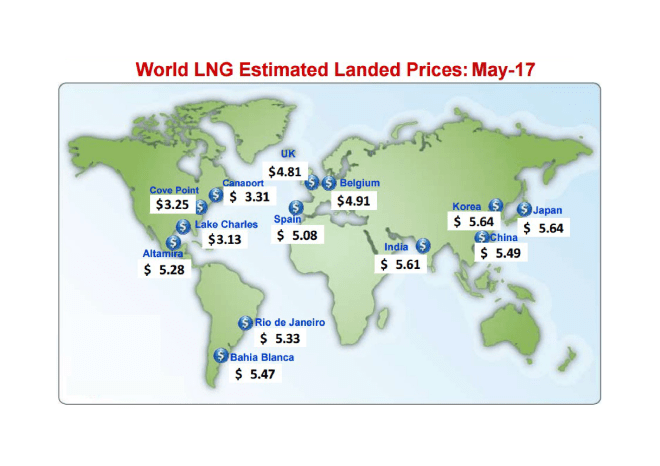
Here is the latest FERC estimate of landed LNG prices/mln BTUs:-

LNG_prices_-_May_17_FERC

Source: Waterborne Energy, Inc, FERC

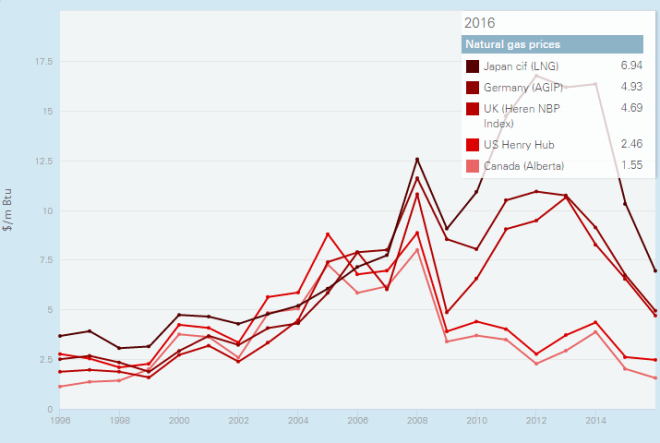
You might be forgiven for wondering why the Japanese, despite being the world’s largest importer of LNG, are bothering with Methane Hydrate, but this chart from BP shows the evolution of Natural Gas prices over the last two decades:-

bp-statsreview

Source: BP

Japan was squeezed by rising fuel costs between 2009 and 2012 only to be confronted by the Yen weakening from USDJPY 80 to USDJPY 120 from 2012 to 2014. If Abenomics succeeds and the Yen embarks upon a structural decline, domestically extracted Methane Hydrate may be a saviour.

Cooperating internationally also makes sense for Japan. The US launched a national research and development programme in 1982. They have deep water pilot projects off the coast of South Carolina and in the Gulf of Mexico as well as in the permafrost of the Alaska North Slope.

Technical challenges

As deep sea drilling technology advances the cost of extraction should start to decline but as this 2014 BBC article – Methane hydrate: Dirty fuel or energy saviour? explains, there are a number of risks:-

Quite apart from reaching them at the bottom of deep ocean shelves, not to mention operating at low temperatures and extremely high pressure, there is the potentially serious issue of destabilising the seabed, which can lead to submarine landslides.

A greater potential threat is methane escape. Extracting the gas from a localised area of hydrates does not present too many difficulties, but preventing the breakdown of hydrates and subsequent release of methane in surrounding structures is more difficult.

And escaping methane has serious consequences for global warming – recent studies suggest the gas is 30 times more damaging than CO2.

Given the long term scale of the potential reward, it may seem surprising that the Japanese have only invested $179mln to date, however these projects have been entirely government funded.  Commercial operators are waiting for clarification of the cost of extraction and size of viable reserves before entering the fray. Most analysts suggest commercial production is unlikely before 2025. With the price of Natural Gas depressed, development may be delayed further but in the longer term Methane Hydrate will become a major global source of energy. Like the fracking revolution of the past decade, it is only a matter of when.

The history of fracking can be traced back to 1862 and the first patent was filed in 1865. In the case of Fire Ice, I do not believe we will have to wait that long. Deep sea mining and drilling technologies are advancing quickly in several different arenas. The currently depressed price of LNG is only one factor holding back the development process.

Conclusions and investment opportunities

Predicting the timing of technological breakthroughs is futile, however, the US energy sector is currently witnessing a resurgence in profitability. In their June 16th bulletin, FactSet Research estimated that Q2 profits for the S&P500 will rise 6.5%. They go on to highlight the sector which has led the field, Energy, the emphasis is mine:-

At the sector level, nine sectors are projected to report year-over-year growth in earnings for the quarter. However, the Energy sector is projected to report the highest earnings growth of all eleven sectors at 401%.

This sector is also expected to be the largest contributor to earnings growth for the S&P 500 for Q2 2017. If the Energy sector is excluded, the estimated earnings growth rate for the index for Q2 2017 would fall to 3.6% from 6.5%.

The price of Brent Crude Oil has been falling but the previous investment in technology combined with some aggressive cost cutting in the recent past has been the driving force behind this spectacular increase in Energy Sector profitability. Between 2014 and 2016 Energy Sector capital expenditure fell nearly 40%. I expect a rebound in capex over the next couple of years. It may be too soon for this to spill over to commercial investment in Methane Hydrate, but developments in Japan and China during the past two months suggest a breakthrough may be imminent. The next phase of investment may be about to begin.

Central Bank balance sheet adjustment – a path to enlightenment?

400dpiLogo

Macro Letter – No 79 – 16-6-2017

Central Bank balance sheet adjustment – a path to enlightenment?

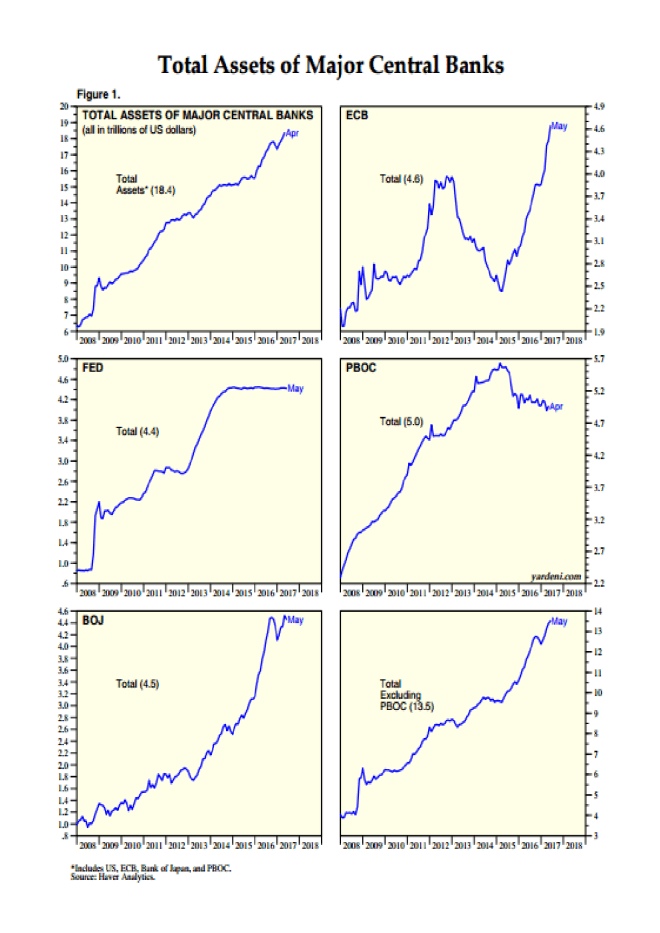
  • The balance sheets of the big four Central Banks reached $18.4trln last month
  • The Federal Reserve will commence balance sheet adjustment later this year
  • The PBoC has been in the vanguard, its experience since 2015 has been mixed
  • Data for the UK suggests an exit from QE need not precipitate a stock market crash

The Federal Reserve (Fed) is about to embark on a reversal of the Quantitative Easing (QE) which it first began in November 2008. Here is the 14th June Federal Reserve Press Release – FOMC issues addendum to the Policy Normalization Principles and Plans. This is the important part:-

For payments of principal that the Federal Reserve receives from maturing Treasury securities, the Committee anticipates that the cap will be $6 billion per month initially and will increase in steps of $6 billion at three-month intervals over 12 months until it reaches $30 billion per month.

For payments of principal that the Federal Reserve receives from its holdings of agency debt and mortgage-backed securities, the Committee anticipates that the cap will be $4 billion per month initially and will increase in steps of $4 billion at three-month intervals over 12 months until it reaches $20 billion per month.

The Committee also anticipates that the caps will remain in place once they reach their respective maximums so that the Federal Reserve’s securities holdings will continue to decline in a gradual and predictable manner until the Committee judges that the Federal Reserve is holding no more securities than necessary to implement monetary policy efficiently and effectively.
On the basis of their press release, the Fed balance sheet will shrink until it is nearer $2.5trln versus $4.4trln today. If they stick to their schedule that should take until the end of 2021.
The Fed is likely to be followed by the other major Central Banks (CBs) in due course. Their combined deleveraging is unlikely to go unnoticed in financial markets. What are the likely implications for bonds and stocks?

To begin here are a series of charts which tell the story of the Central Bankers’ response to the Great Recession:-

Central_Bank_Balance_Sheets_-_Yardeni_May_2017

 Source: Yardeni Research, Haver Analytics

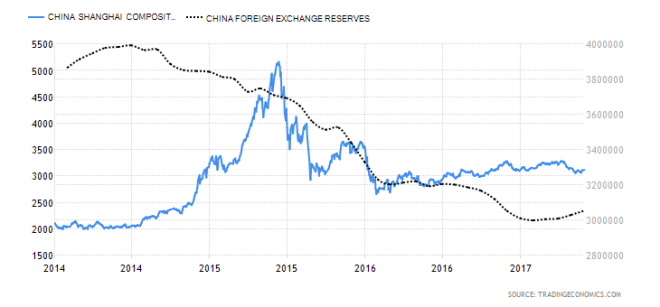
Since 2008 the balance sheets of the four major CBs have grown from around $6.5trln to $18.4trln. In the case of the People’s Bank of China (PBoC), a reduction began in 2015. This took the form of a decline in its foreign exchange reserves in order to support the weakening RMB exchange rate against the US$. The next chart shows the path of Chinese FX reserves and the Shanghai Stock index since the beginning of 2014. Lagged response or coincidence? Your call:-

China FX reserves and stocks 2014 - 2017

Source: Trading Economics

At a global level, the PBoC balance sheet reduction has been more than offset by the expansion of the balance sheets of the Bank of Japan (BoJ) and European Central Bank (ECB), however, a synchronous balance sheet contraction by all the major CBs is likely to be of considerable concern to financial market participants globally.

An historical perspective

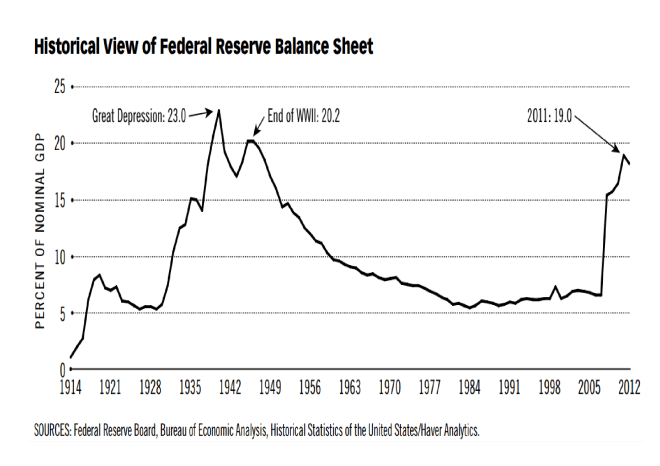
Have CB balance sheets ever been as large as they are today? Indeed they have. The chart below which terminates in 2011, shows the evolution of the Fed balance sheet since its inception in 1913:-

Federal_Reserve_Balance_Sheet_-_History_-_St_Louis

Source: Federal Reserve, Haver Analytics

The increase in the size of the Fed balance sheet during the period of the Great Depression and WWII was related to a number of factors including: gold inflows, what Friedman and Schwartz termed “precautionary demand” for reserves by commercial banks, lack of alternative assets, changes in reserve requirements, expansion of income and war financing.

For a detailed review of all these factors, this paper from 2016 – How was the Quantitative Easing Program of the 1930s Unwound? By Matthew Jaremski and Gabriel Mathy – makes fascinating reading, here’s the abstract:-

Outside of the recent past, excess reserves have only concerned policymakers in one other period: The Great Depression of the 1930s. This historical episode thus provides the only guidance about the Fed’s current predicament of how to unwind from the extensive Quantitative Easing program. Excess reserves in the 1930s were never actively unwound through a reduction in the monetary base. Nominal economic growth swelled required reserves while an exogenous reduction in monetary gold inflows due to war embargoes in Europe allowed banks to naturally reduce their excess reserves. Excess reserves fell rapidly in 1941 and would have unwound fully even without the entry of the United States into World War II. As such, policy tightening was at no point necessary and likely was even responsible for the 1937-1938 recession.

During the period from April 1937 to April 1938 the Dow Jones Industrial Average fell from 194 to 100. Monetarists, such as Friedman, blamed the recession on a tightening of money supply in 1936 and 1937. I don’t believe Friedman’s censure is lost on the FOMC today: past Fed Chair, Ben Bernanke, is regarded as one of the world’s leading authorities on the causes and policy errors of the Great Depression.

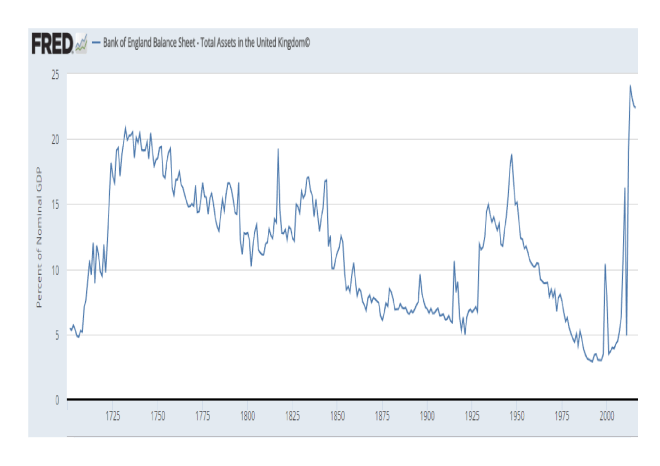
But is the size of a CB balance sheet a determinant of the direction of the stock market? A richer data set is to be found care of the Bank of England (BoE). They provide balance sheet data going back to 1694, although the chart below, care of FRED, starts in 1701:-

BoE_Balance_Sheet_to_GDP_since_1701_-_BoE_and_FRED

Source: Federal Reserve, Bank of England

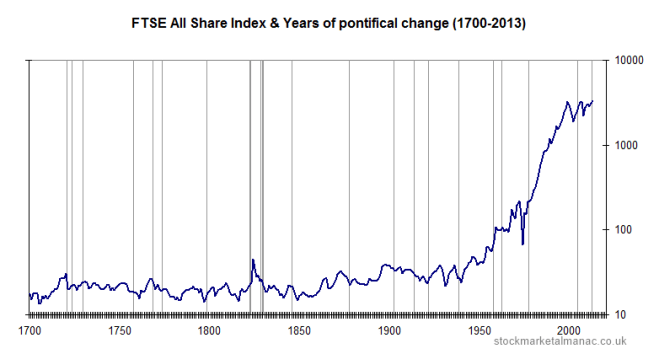
The BoE really only became a CB, in the sense we might recognise today, as a result of the Banking Act of 1844 which granted it a monopoly on the issuance of bank notes. The chart below shows the performance of the FT-All Share Index since 1700 (please ignore the reference to the Pontifical change, this was the only chart, offering a sufficiently long history, which I was able to discover in the public domain):-

UK-equities-1700-2012 Stockmarket Almanac

Source: The Stock Almanac

The first crisis to test the Bank’s resolve was the panic of 1857. During this period the UK stock market barely changed whilst the BoE balance sheet expanded by 21% between 1857 and 1859 to reach 10.5% of GDP: one might, however, argue that its actions were supportive.

The next crisis, the recession of 1867, was precipitated by the end of the American Civil War and, of more importance to the financial system, the demise of Overund and Gurney, “the Bankers Bank”, which was declared insolvent in 1866. Perhaps surprisingly, the stock market remained relatively calm and the BoE balance sheet expanded at a more modest 20% over the two years to 1858.

Financial markets became a little more interconnected during the Panic of 1873. This commenced with the “Gründerzeit” or “Founders” crash on the Vienna Stock Exchange. It sent shockwaves around the world. The UK stock market declined by 31% between 1873 and 1878. The BoE may have exacerbated the decline, its balance sheet contracted by 14% between 1873 and 1875. Thereafter the trend reversed, with an expansion of 30% over the next four years.

I am doubtful about the BoE balance sheet contraction between 1873 and 1875 being a policy mistake. 1873 was in fact the beginning of the period known as the Long Depression. It lasted until 1896. Nine years before the end of this 20 year depression the stock market bottomed (1887). It then rose by 74% over the next 11 years.

The First World War saw the stock market decline, reaching its low in 1917. From juncture it rallied, entirely ignoring the post-war recession of 1919 to 1921. Its momentum was only curtailed by the Great Crash of 1929 and subsequent Great Depression of 1930-1931.

Part of the blame for the severity of the Great Depression may be levelled at the BoE, its balance sheet expanded by 77% between 1928 and 1929. It then remained relatively stable despite Sterling’s departure from the Gold Standard in 1931 and only began to expand again in 1933 and 1934. Its balance sheet as a percentage of GDP was by this time at its highest since 1844, due to the decline in GDP rather than any determined effort to expand the balance sheet on the part of the Old Lady of Threadneedle Street. At the end of 1929 its balance sheet stood at £537mln, by the end of 1934 it had reached £630mln, an increase of just 17% over five traumatic years. The UK stock market, which had bottomed in 1931 – the level it had last traded in 1867 – proceeded to rally for the next five years.

Adjustment without tightening

History, on the basis of the data above, is ambivalent about the impact the size of a CB’s balance sheet has on the financial markets. It is but one of the factors which influences monetary conditions, the others are the availability of credit and its price.

George Selgin described the Fed’s situation clearly in a post earlier this year for The Cato Institute – On Shrinking the Fed’s Balance Sheet. He begins by looking at the Fed pre-2008:-

…the Fed got by with what now seems like a modest-sized balance sheet, the liabilities of which consisted mainly of circulating Federal Reserve notes, supplemented by Treasury and GSE deposit balances and by bank reserve balances only slightly greater than the small amounts needed to meet banks’ legal reserve requirements. Because banks held few excess reserves, it took only modest adjustments to the size of the Fed’s balance sheet, achieved by means of open-market purchases or sales of short-term Treasury securities, to make credit more or less scarce, and thereby achieve the Fed’s immediate policy objectives. Specifically, by altering the supply of bank reserves, the Fed could  influence the federal funds rate — the rate banks paid other banks to borrow reserves overnight — and so keep that rate on target.

Then comes the era of QE – the sea-change into something rich and strange. The purchase of long-term Treasuries and Mortgage Backed Securities is funded using the excess reserves of the commercial banks which are held with the Fed. As Selgin points out this means the Fed can no longer use the federal funds rate to influence short-term interest rates (the emphasis is mine):-

So how does the Fed control credit now? Instead of increasing or reducing the availability of credit by adding to or subtracting from the supply of Fed deposit balances, the Fed now loosens or tightens credit by controlling financial institutions’ demand for such balances using a pair of new monetary control devices. By paying interest on excess reserves (IOER), the Fed rewards banks for keeping balances beyond what they need to meet their legal requirements; and by making overnight reverse repurchase agreements (ON-RRP) with various GSEs and money-market funds, it gets those institutions to lend funds to it.

Between them the IOER rate and the implicit ON-RRP rate define the upper and lower limits, respectively, of an effective federal funds rate target “range,” because most of the limited trading that now goes on in the federal funds market consists of overnight lending by GSEs (and the Federal Home Loan Banks especially), which are not eligible for IOER, to ordinary banks, which are. By raising its administered rates, the Fed encourages other financial institutions to maintain larger balances with it, instead of trading those balances for other interest-earning assets. Monetary tightening thus takes the form of a reduced money multiplier, rather than a reduced monetary base.

Selgin goes on to describe this as Confiscatory Credit Control:-

…Because instead of limiting the overall availability of credit like it did in the past, the Fed now limits the credit available to other prospective borrowers by grabbing more for itself, which it then passes on to the U.S. Treasury and to housing agencies whose securities it purchases.

The good news is that the Fed can adjust its balance sheet with relative ease (emphasis mine):-

It’s only because the Fed has been paying IOER at rates exceeding those on many Treasury securities, and on short-term Treasury securities especially, that banks (especially large domestic and foreign banks) have chosen to hoard reserves. Even today, despite rate increases, the IOER rate of 75 basis points exceeds yields on most Treasury bills.  Were it not for this difference, banks would trade their excess reserves for Treasury securities, causing unwanted Fed balances to be passed around like so many hot-potatoes, and creating new bank deposits in the process. Because more deposits means more required reserves, banks would eventually have no excess reserves to dispose of.

Phasing out ON-RRP, on the other hand, would eliminate the artificial boost that program has been giving to non-bank financial institutions’ demand for Fed balances.

Because phasing out ON-RRP makes more reserves available to banks, while reducing IOER rates reduces banks’ own demand for such reserves, both policies are expansionary. They don’t alter the total supply of Fed balances. Instead they serve to raise the money multiplier by adding to banks’ capacity and willingness to expand their own balance sheets by acquiring non-reserve assets. But this expansionary result is a feature, not a bug: as former Fed Vice Chairman Alan Blinder observed in December 2013, the greater the money multiplier, the more the Fed can shrink its balance sheet without over-tightening. In principle, so long as it sells enough securities, the Fed can reduce its ON-RRP and IOER rates, relative to prevailing market rates, without missing its ultimate policy targets.

Selgin expands, suggesting that if the Fed decide to announce a fixed schedule for adjustment (which they have) then they may employ another tool from their armoury, the Term Deposit Facility:-

…to the extent that the Fed’s gradual asset sales fail to adequately compensate for a multiplier revival brought about by its scaling-back of ON-RRP and IOER, the Fed can take up the slack by sufficiently raising the return on its Term Deposits.

And the Fed’s federal funds rate target? What happens to that? In the first place, as the Fed scales back on ON-RRP and IOER, by allowing the rates paid through these arrangements to decline relative to short-term Treasury rates, its administered rates will become increasingly irrelevant. The same changes, together with concurrent assets sales, will make the effective federal funds rate more relevant, by reducing banks’ excess reserves and increasing overnight borrowing. While the changes are ongoing, the Fed would continue to post administered rates; but it could also revive its pre-crisis practice of announcing a single-valued effective funds rate target. In time, the latter target could once again be more-or-less precisely met, making it unnecessary for the Fed to continue referring to any target range.

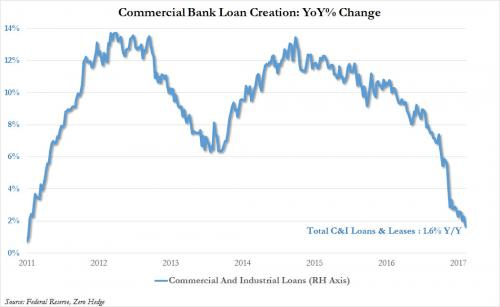
With unemployment falling and economic growth steady the Fed are expected to tighten monetary policy further but the balance sheet adjustment needs to be handled carefully, conditions may look benign but the Fed ultimately holds more of the nation’s deposits than at any time since the end of WWII. Bank lending (last at 1.6%) is anaemic at best, as the chart below makes clear:-

Commercial_Bank_Loan_Creation_US

Source: Federal Reserve, Zero Hedge

The global perspective

The implications of balance sheet adjustment for the US have been discussed in detail but what about the rest of the world? In an FT Article – The end of global QE is fast approaching – Gavyn Davies of Fulcrum Asset Management makes some projections. He sees global QE reaching a plateau next year and then beginning to recede, his estimate for the Fed adjustment is slightly lower than the schedule announced last Wednesday:-

Fulcrum_Projections_for_tapering

Source: FT, Fulcrum Asset Management

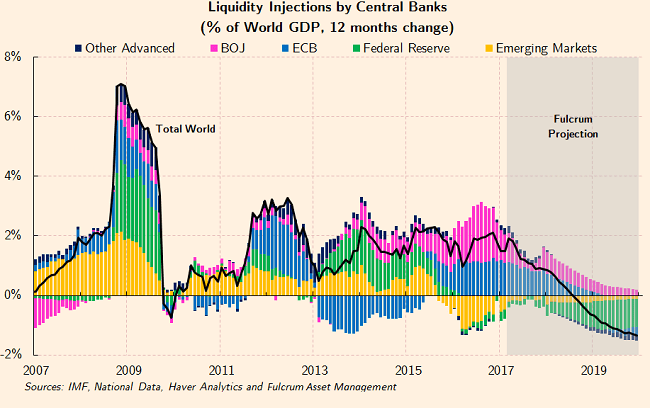
He then looks at the previous liquidity injections relative to GDP – don’t forget 2009 saw the world growth decline by -0.8%:-

Fulcrum CB Liquidity Injections - March 2017 forecast

Source: IMF, National Data, Haver Analytics, Fulcrum Asset Management

It is worth noting that the contraction of Emerging Market CB liquidity during 2016 was principally due to the PBoc reducing their foreign exchange reserves. The ECB reduction of 2013 – 2015 looks like a policy mistake which they are now at pains to rectify.

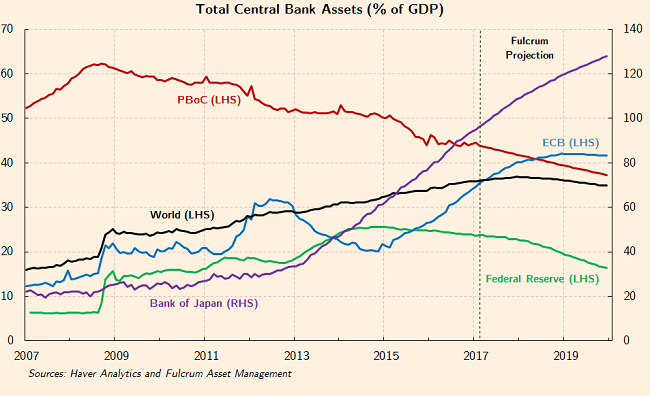
Finally Davies looks at the breakdown by institution. The BoJ continues to expand its balance sheet, rising above 100% of GDP, whilst eventually the ECB begins to adjust as it breaches 40%:-

Fulcrum Estimates of CB Balance sheets - March 2017 

Source: Haver Analytics, Fulcrum Asset Management

I am not as confident as Davies about the ECB’s ability to reverse QE. They were never able to implement a European equivalent of the US Emergency Economic Stabilization Act of 2008, which incorporated the Troubled Asset Relief Program – TARP and the bailout of Fannie Mae and Freddie Mac. Europe’s banking system remains inherently fragile.

ProPublica – Bailout Costs – gives a breakdown of cost of the US bailout. The policies have proved reasonable successful and at little cost the US tax payer. Since initiation in 2008 outflows have totalled $623.4bln whilst the inflows amount to $708.4bln: a net profit to the US government of $84.9bln. Of course, with $455bln of troubled assets still outstanding, there is still room for disappointment.

The effect of TARP was to unencumber commercial banks. Freed of their NPL’s they were able to provide new credit to the real economy once more. European banks remain saddled with an abundance of NPL’s; her governments have been unable to agree on a path to enlightenment.

Conclusions and Investment Opportunities

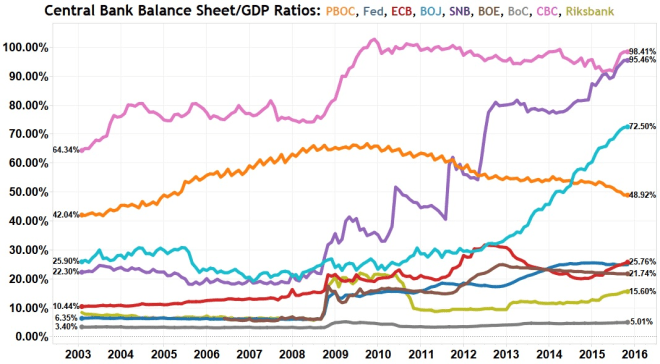
The chart below shows a selection of CB balance sheets as a percentage of GDP. It is up to the end of 2016:-

centralbankbalancesheetgdpratios

SNB: Swiss National Bank, BoC: Bank of Canada, CBC: Central Bank of Taiwan, Riksbank: Swedish National Bank

Source: National Inflation Association

The BoJ has since then expanded its balance sheet to 95.5% and the ECB, to 32%. With the Chinese economy still expanding (6.9% March 2017) the PBoC has seen its ratio fall to 45.4%.

More important than the sheer scale of CB balance sheets, the global expansion has changed the way the world economy works. Combined CB balance sheets ($22trln) equal 21.5% of global GDP ($102.4trln). The assets held are predominantly government and agency bonds. The capital raised by these governments is then invested primarily in the public sector. The private sector has been progressively crowded out of the world economy ever since 2008.

In some ways this crowding out of the private sector is similar to the impact of the New Deal era of 1930’s America. The private sector needs to regain pre-eminence but the transition is likely to be slow and uneven. The tide may be about to turn but the chance for policy mistakes, as flows reverse, is extremely high.

For stock markets the transition to QT – quantitative tightening – may be neutral but the risks are on the downside. For government bond markets there are similar concerns: who will buy the bonds the CBs need to sell? If interest rates normalise will governments be forced to tighten their belts? Will the private sector be in a position to fill the vacuum created by reduced public spending, if they do?

There is an additional risk. Yield curve flattening. Banks borrow short and lend long. When yield curves are positively sloped they can quickly recapitalise their balance sheets: when yield curves are flat, or worse still inverted, they cannot. Increases in reserve requirements have made government bonds much more attractive to hold than other securities or loans. The Commercial Bank Loan Creation chart above may be seen as a warning signal. The mechanism by which CBs foster credit expansion in the real economy is still broken. A tapering or an adjustment of CB balance sheets, combined with a tightening of monetary policy, may have profound unintended consequences which will be magnified by a severe shakeout in over-extended stock and bond markets. Caveat emptor.

Trade and Protectionism post globalisation

400dpiLogo

Macro Letter – No 78 – 02-06-2017

Trade and protectionism post globalisation

  • Protectionism is on the increase among developed nations
  • The benefits of free-trade have been most evident in developing countries
  • Short-term effects on financial markets may be reversed in the long run
  • The net impact on global growth will be negative

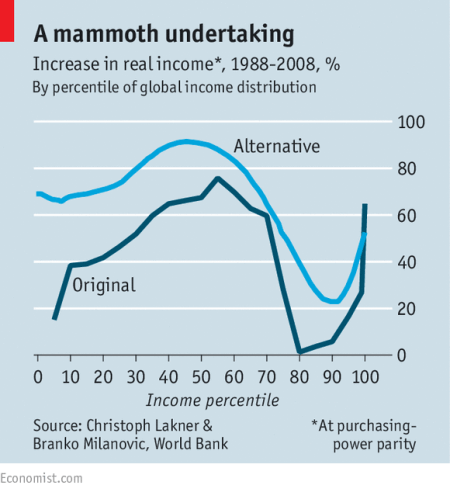
The success of free-trade and globalisation has been a boon for less developed countries but, to judge by the behaviour of the developed world electorate of late, this has been at the expense of the poorer and less well educated peoples of the developed nations. Income inequality in the west has been a focus of considerable debate among economists. The “Elephant Chart” below being but one personification of this trend:-

world-bank-economist-real-income-growth-1988-2008

Source: Economist, World Bank

If the graph looks familiar it’s because I last discussed this topic back in November 2016 in – Protectionism: which countries have room for fiscal expansion? This is what I said about the chart at that time:-

What this chart reveals is that people earning between the 70th and 90th percentile have seen considerably less increase in income relative to their poor (and richer) peers. I imagine a similar chart up-dated to 2016 will show an even more pronounced decline in the fortunes of the lower paid workers of G7.

The unforeseen consequence to this incredible achievement – bringing so many of the world’s poor out of absolute poverty – has been to alienate many of the developed world’s poorer paid citizens. They have borne the brunt of globalisation without participating in much, if any, of the benefit.

It can be argued that this chart is not a fair representation of the reality in the west. This excellent video by Johan Norberg – Dead Wrong – The Elephant Graph – makes some important observations but, as a portfolio manager, friend of mine reminded me recently, when considering human action one should not focus on absolute change in economic circumstances, but relative change. What did he I mean by this? Well, let’s take income inequality. The rich are getting richer and the poor are…getting richer less quickly.

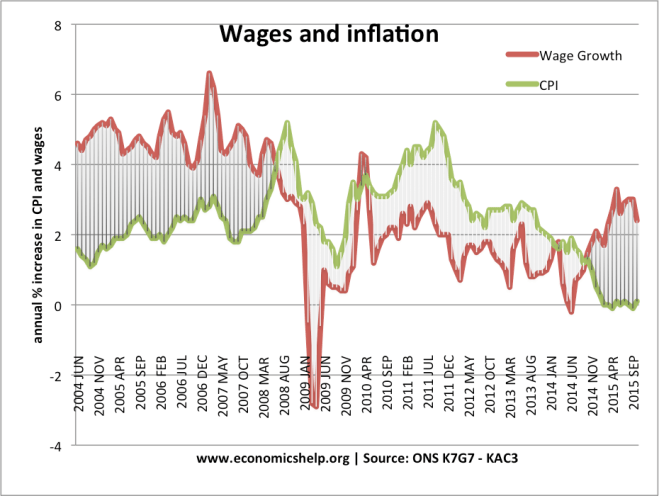
In the dismal science, as Carlyle once dubbed economics, we often take a half-empty view of the world. Take real average income. Since 2008 people have become worse-off as the chart below for the UK shows:-

wages-inflation

Source: Economicshelp.org

However, in the long-run we have become better-off for generations. What really drives prosperity, by which I mean our quality of life, is productivity gains: our ability to harness technology to improve the production of goods and services.

Financial markets are said to be driven by fear and greed. Society in general is also driven by these factors but there is an additional driver: envy. Any politician who ignores the power of envy, inevitably truncates his or her career.

The gauntlet was thrown down recently by the new US administration: their focus was on those countries with trade surpluses with the US. Accusations of trade and currency manipulation play well to the disenfranchised American voter.

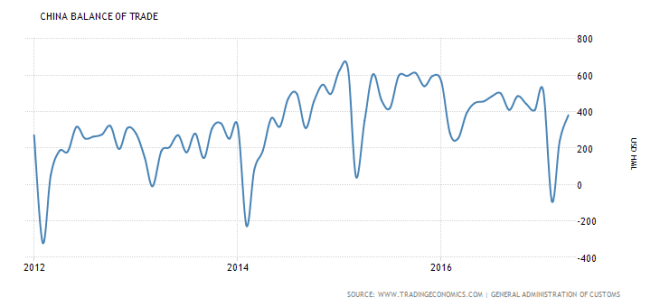
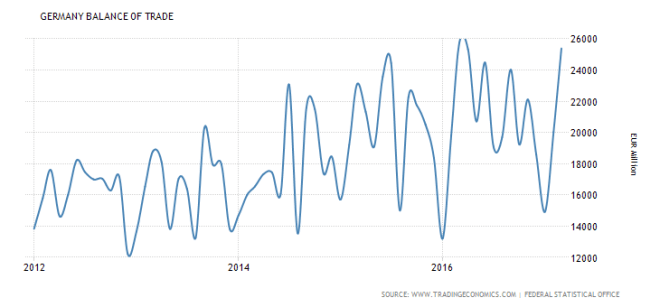
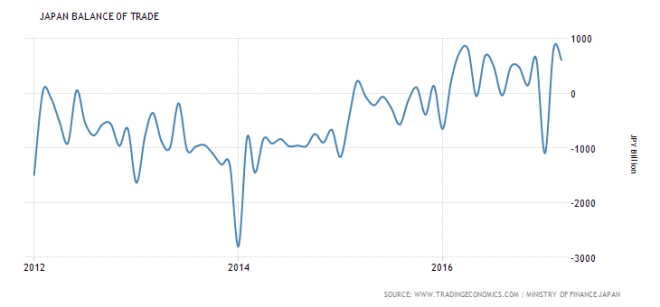
Well before the arrival of the new US President, however, a degree of rebalancing had already begun to occur when China adopted policies to increase domestic consumption back in 2012. A recent white paper entitled – Is the Global Economy Rebalancing? By Focus Economics – looks at the three countries with the largest persistent current account surpluses: China, Germany and Japan. As they comment in their introduction, a current account surplus may be derived by many different means:-

Decades of conflicting perspectives over the causes and effects of global trade imbalances have been thrust back into the spotlight in recent months by Donald Trump’s brazen criticism of almost every country with a significant current account surplus with the U.S. His controversial accusation that big exporter countries are deliberately weakening their currencies to gain a competitive advantage taps into an issue that has perplexed and divided economists and policymakers ever since the mid-1990s. At that time, countries such as the U.S. were starting to build up large current account deficits, while others such as China, Germany and Japan were accumulating large surpluses.

Put simply, a country’s current account balance measures the difference between how much it spends and makes abroad. Trade in goods usually—but not always—accounts for most of the current account, while the other components are trade in services, income from foreign investment and employment (known as ‘primary income’), and transfer payments such as foreign aid and remittances (known as ‘secondary income’).

A current account surplus or deficit is not necessarily in and of itself a good or bad thing, since a number of considerations must be factored in—for example, in the case of deficit countries, whether they make a return on their investments that exceeds the costs of funding them. A large current account surplus can be considered a desirable sign of an efficient and competitive economy if it comprises a positive trade balance generated by market forces. And yet such competitiveness can also be falsely created to an extent by policy decisions (e.g. a deliberate currency weakening), or may alternatively be a sign of overly weak domestic demand in a highly productive country. Therein lies the crux of the controversy, or at least one of many. 

Global imbalances were a critically important contributing factor to the financial crisis, although they did not in themselves cause it. Even if the precise nature of that connection has sparked different interpretations, there is at least more or less agreement on the fundamentals of the part played by trade relations between the U.S. and China, the two countries traditionally responsible for the lion’s share of global imbalances. Credit-fueled growth in the U.S. encouraged consumers to spend more, including on products originating in China, thereby further increasing the U.S. trade deficit with China and prompting China to “recycle” the dollars gained by buying U.S. assets (mostly Treasury notes). This, in turn, helped to keep U.S. interest rates low, encouraging ever greater bank lending, which pushed up housing prices, caused a subprime mortgage crisis and ultimately ended in a nasty deleveraging process.

Services and investment balances can be difficult to measure accurately; trade data is easier to calculate. Here are the three current account surplus countries in terms of their trade balances:-

china-balance-of-trade

Source: Trading Economics, Chinese General Administration of Customs

Interestingly, China’s trade balance has declined despite the recent devaluation in the value of the Yuan versus the US$.

germany-balance-of-trade

Source: Trading Economics, German Federal Statistics Office

The relative weakness of the Euro seems to have underpinned German exports. On this basis, the weakening of the Euro, resulting from the Brexit vote, has been an economic boon!

japan-balance-of-trade

Source: Trading Economics, Japanese Ministry of Finance

The Abenomics policy of the three arrows whilst it has succeeded in weakening the value of the Yen, has done little to stem its steadily deteriorating trade balance. The Yen has risen ever since the ending of Bretton Woods, it behoves Japanese companies to invest aboard. The relative strength of the current account is the result of Japanese investment abroad.

Trade data is not without its flaws, even in a brand dominated business such as automobiles the origin of manufacture can turn out to be less obvious than it might at first appear. According to the Kogod – Made in America Auto Index 2016 – at 81% the Honda Accord ranks fifth out of all automobiles, in terms of the absolute percentage of an entire vehicle which is built in the USA, well above the level of many Ford and General Motors vehicles.

Conclusions and Investment Opportunities

The financial markets will react differently in each country to the headwinds of de-globalisation and the rise of protectionism. The US, however, presents an opportunity to examine the outcome for a largest economy in the world.

The US currency’s initial reaction to the Trump election win was a significant rise. The US$ Index rallied from 97.34 on the eve of the election to test 103.81 at the beginning of January. Since then, as the absolute power, or lack thereof, of the new president has become apparent, the US$ Index has retraced the entire move. Protectionism on the basis of this analysis is likely to be UD$ positive. In the long run protectionist policies act as a drag on economic growth. The USA has the largest absolute trade deficit. Lower global economic growth will either lead to a rise in the US trade deficit or a strengthening of the US$, or, perhaps, a combination of the two.

Interest rates and bonds may be less affected by the strength of the US currency in a protectionist scenario, but domestic wage inflation is likely to increase in the medium term, especially if border controls are tightened further, closing off the flow of immigrant workers.

US stocks should initially benefit from the reduction in competition derived from a protectionist agenda but in the process the long run competitiveness of these firms will be undermined. The continual breaching to new highs which has been evident in the S&P 500 (and recently, the Nasdaq) is at least partially due to expectation of the agenda of the new administration. These policies include the lowering of corporation tax rates (from 35% to 15%) to bring them in line with Germany, infrastructure spending (in the order of $1trln) and protectionist pressure to “Buy American, Hire American”. Short term the market is still rising but valuations are becoming stretched by many metrics, as I said recently in Trumped or Stumped? The tax cut, the debt ceiling and riding the gravy train:-

Pro-business US economic policy will continue to drive US stocks: the words of Pink Floyd spring to mind…we call it riding the gravy train.

Hard Brexit maths – walking away

400dpiLogo

Macro Letter – No 77 – 19-05-2017

Hard Brexit maths – walking away

  • The UK’s NIESR estimate the bill for Hard Brexit to the UK at EUR 66bln
  • I guesstimate the cost of Hard Brexit to the EU at EUR 62bln
  • Legal experts for both sides suggest UK obligations cease on Brexit
  • A Free-trade deal with the EU may not begin until after March 2019

…How selfhood begins with a walking away…

C. Day-Lewis

It has been estimated that if the UK accedes to EU demands for a further EUR 100bln in order to begin the process of establishing a bi-lateral trade deal with the EU post-Brexit, it will cost the UK economy 4.4% of GDP. According to estimates from the NIESR, to revert to WTO Most Favored Nation terms (the Hard Brexit option) would only cost between -2.7% and -3.7% of GDP (EUR 61bln to EUR 84bln).

In January UK MP May stated:-

No deal is better than a bad deal.

It looks, on this basis, as though the UK may indeed walk away from its purported EU obligations.

A more considered analysis from, the politically influential Brussels based thin-tank Bruegel – Divorce settlement or leaving the club? A breakdown of the Brexit bill – suggests a more modest final bill:-

Depending on the scenario, the long-run net Brexit bill could range from €25.4 billion to €65.1 billion, possibly with a large upfront UK payment followed by significant EU reimbursements later.

This substantial price range is due to the way the UK’s share of liabilities is calculated. At 12% (the UK’s rebate-adjusted share of EU commitments) it is EUR 25.4bln. At 15.7% (the UK’s gross contributions without a rebate adjustment) it rises to EUR 65.1bln.

The House of Lords legal interpretation – Brexit and the EU budget:-

Article 50 provides for a ‘guillotine’ after two years if a withdrawal agreement is not reached unless all Member States, including the UK, agree to extend negotiations. Although there are competing interpretations, we conclude that if agreement is not reached, all EU law—including provisions concerning ongoing financial contributions and machinery for adjudication—will cease to apply, and the UK would be subject to no enforceable obligation to make any financial contribution at all.

This suggests all of the UK’s commitments to the EU are linked to membership. If that legal interpretation is correct, there would be no Brexit bill at the moment of departure. Apparently EU legal experts have arrived at similar conclusions. The Telegraph – €100bn Brexit bill is ‘legally impossible’ to enforce, European Commission’s own lawyers admit has more on this contentious subject.

Setting aside the legal obligations in favour of a diplomatic solution, what is the price range where a potential agreement may lie? The cost to the UK appears to be capped at EUR 84bln in a worst case scenario. One may argue that the ability of Sterling to decline, thus improving the UK’s terms of trade, makes this scenario unrealistically high, but as I discussed in – Uncharted British waters – the risk to growth, the opportunity to reform historic evidence doesn’t support the case very well at all:-

Another factor to consider, since the June vote, is whether the weakness of Sterling will have a positive impact on the UK’s chronic balance of payments deficit. This post from John Ashcroft – The Saturday Economist – The great devaluation myth suggests that, if history even so much as rhymes, it will not:-

If devaluation solved the problems of the British Economy, the UK would have one of the strongest trade balances in the global economy…. the depreciation of sterling in 2008 did not lead to a significant improvement in the balance of payments. There was no “re balancing effect”. We always argued this would be the case. History and empirical observation provides the evidence.

There was no improvement in trade as a result of the exit from the ERM and the subsequent devaluation of 1992, despite allusions of policy makers to the contrary. Check out our chart of the day and the more extensive slide deck below.

Seven reasons why devaluation doesn’t improve the UK balance of payments …

1 Exporters Price to Market…and price in Currency…there is limited pass through effect for major exporters

2 Exporters and importers adopt a balanced portfolio approach via synthetic or natural hedging to offset the currency risks over the long term

3 Traders adopt a medium term view on currency trends better to take the margin boost or hit in the short term….rather than price out the currency move

4  Price Elasticities for imports are lower than for exports…The Marshall Lerner conditions are not satisfied…The price elasticities are too limited to offset the “lost revenue” effect

5  Imports of food, beverages, commodities, energy, oil and semi manufactures are relatively inelastic with regard to price. The price co-efficients are much weaker and almost inelastic with regard to imports

6 Imports form a significant part of exports, either as raw materials, components or semi manufactures. Devaluation increases the costs of exports as a result of devaluation

7 There is limited substitution effect or potential domestic supply side boost

8 Demand co-efficients are dominant


But what is the economic impact on the EU? CIVITAS – Potential post-Brexit tariff costs for EU-UK trade postulates some estimates:-

Our analysis shows that if the UK leaves the EU without a trade deal UK exporters could face the potential impact of £5.2 billion in tariffs on goods being sold to the EU. However, EU exporters will also face £12.9 billion in tariffs on goods coming to the UK.

Exporters to the UK in 22 of the 27 remaining EU member states face higher tariffs costs when selling their goods than UK exporters face when selling goods to those countries.

German exporters would have to deal with the impact of £3.4 billion of tariffs on goods they export to the UK. UK exporters in return would face £0.9 billion of tariffs on goods going to Germany.

French exporters could face £1.4 billion in tariffs on their products compared to UK exporters facing £0.7 billion. A similar pattern exists for all the UK’s major EU trading partners.

The biggest impact will be on exports of goods relating to vehicles, with tariffs in the region of £1.3 billion being applied to UK car-related exports going to the EU. This compares to £3.9 billion for the EU, including £1.8 billion in tariffs being applied to German car-related exports.

The net Trade Effect of a Hard Brexit on the basis of these calculations is EUR 7.7bln in favour of the UK.

Then we must consider the UK contribution to the EU budget, which, if the House of Lords assessment is confirmed, will be zero after Brexit. This will cost the EU EUR7.8bln, based on the 2017 net EU budget of EUR 134bln, to which the UK is currently the second largest contributor at 5.8%.

Next there is the question of the impact on EU27 economic growth. These headwinds will be felt especially in the Netherlands, Ireland and Cyprus but the largest absolute cost will be borne by Germany.

According to a February 2016 study by DZ Bank, a Hard Brexit would be to reduce German economic growth by -0.5%, from 1.7% to 1.4% – EUR 18.5bln. Credit Agricole published a similar study of the impact on the French economy in June 2016. They estimated that French GDP would be reduced by -0.4% in the event of a free-trade agreement and -0.6% in the event of a Hard Brexit – EUR 13.2bln. The Netherlands Bureau for Economic Policy Analysis (CPB) estimated the cost to the Netherlands at -1.2% – EUR 8.2bln. Italian Government forecasters estimate the impact at -0.5 to -1% – taking the best case scenario – EUR 8.3bln. A leaked Spanish Government report from March 2017 (interestingly, the only estimate I have been able to uncover since the Brexit vote) indicates a cost of between -0.17% and -0.34% of GDP – again, taking the best case – EUR 2bln. Ireland, given its geographic position, shared language and border, has, perhaps the closest ties with the UK of any EU27 country. Back in 2016 the Irish ERSI estimated the impact on Ireland at only -1%, I suspect it might be greater but I will take them at their word – EUR 2.6bln.

In the paragraph above I have looked at just five out of the EU27. Added together the cost to just these five countries is EUR 52.8bln, but I believe it to be representative, they accounted for 84.74% of EU GDP in 2016. From this I arrive at an extrapolated cost to the EU of a Hard Brexit of EUR 62.3bln.

The European Commission has indicated that the cost for the UK to begin negotiating the terms of a new free-trade agreement with the EU may be as much as EUR 100bln. The cost to the UK, of simply walking away – Hard Brexit – is estimated at between EUR 61bln and EUR 84bln per annum. The cost of Hard Brexit to the EU is estimated (I should probably say guesstimated, since there are so many uncertainties ahead) at EUR 62bln. A simple cost benefit analysis suggests that both sides have relatively similar amounts to lose in the short term. And I hate to admit it, but looked at from a negative point of view, in the long run, the UK, with its structural current account and trade deficit, may have less to lose from simply walking away.

Conclusion and Investment Opportunities

Brexit negotiations are already and will remain deeply political. From a short-term economic perspective it makes sense for the UK to walk away and re-establish its relationships with its European trading partners in the longer run. Given the UK trade deficit with the EU it has the economic whip-hand. Working on the assumption that Jean Claude Junker is not Teresa May’s secret weapon (after all, suggesting ever higher costs for negotiating a free-trade deal makes it more likely that the UK refuses to play ball) one needs to step back from the economics of the situation. The politics of Brexit are already and will probably become even more venal. For the sake of the UK economy, and, for that matter the economies of the EU, I believe it is better for the UK to walk away To those of you who have read my previous articles about Brexit, I wish to make clear, this is a change of opinion, politics has trumped economic common sense.

The implications for the UK financial markets over the next 22 months is uncertainty, although May’s decision to adopt a Hard Brexit starting point has mitigated a substantial part of these risks. Sterling is likely to act as the principle safety valve, however, a fall in the trade-weighted value of the currency will feed through to higher domestic inflation. Short term interest rates, and in their wake Gilt yields, are likely to rise in this scenario. Domestic stocks are also likely to be vulnerable to the negative impact of currency weakness and higher interest rates on economic growth. The FTSE 100, however, with 70% of its earnings derived from outside the UK, should remain relatively immune.