Australia and Canada – Commodities and Growth

400dpiLogo

Macro Letter – No 30 – 20-02-2015

Australia and Canada – Commodities and Growth

  • Industrial commodities continue to weaken
  • The BoC and RBA have cut official rates in response to falling inflation and slower growth
  • The RBA has more room to manoeuvre in cutting rates, Australian Bonds will outperform

The price of Crude Oil has dominated the headlines for the past few months as Saudi Arabia continued pumping as the price fell in response to increased US supply. However, anaemic growth in Europe and a continued slowdown in China has taken its toll on two of the largest commodity exporting countries. This has prompted both the Bank of Canada (BoC) and the Reserve Bank of Australia (RBA) to cut interest rates by 25 bp each – Canada to 0.75% and Australia to 2.25% – even as CAD and AUD declined against the US$.

In this letter I will look at Iron Ore, Natural Gas and Coal, before going on to examine other factors which may have prompted central bank action. I will go on to assess the prospects for asset markets over the coming year.

Iron Ore

The price of Iron Ore continues to make fresh lows, driven by weakness in demand from China and Japan and the EU.
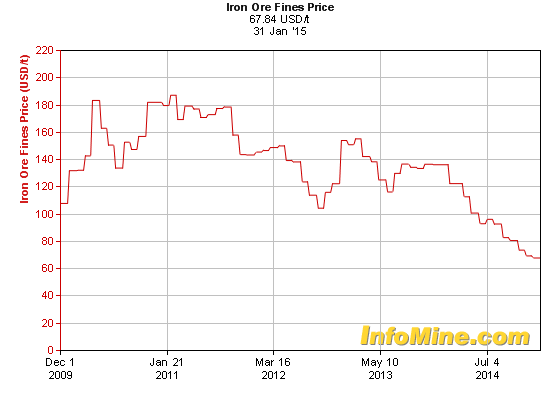
Iron Ore Fines 6 yr

Source: Infomine.com

Iron Ore is Australia’s largest export market, significantly eclipsing Coal, Gold and Natural Gas. It is the second largest producer in the world behind China. 2013 production was estimated at 530 Mt. Canada, with 40 Mt is ranked ninth by production but is the fourth largest exporter. Needless to say, Iron Ore production is of significant importance to both countries, although for Canada Crude Oil comes first followed by vehicle and vehicle parts, then Gold, Gas – including Propane – and Coal. It is also worth noting that the two largest Steel exporters are China and Japan – both major Iron Ore importers. The health of these economies is vital to the fortunes of the Iron Ore industry.

Natural Gas

Natural Gas is a more difficult product to transport and therefore the price differential between different regions is quite pronounced. Japan pays the highest price of all the major economies – exacerbated by its reduction of nuclear generating capacity – closely followed by Singapore, Taiwan and South Korea. The US – Henry Hub – and AECO – Alberta – prices are broadly similar, whilst Europe and Japan pay a significant premium:-
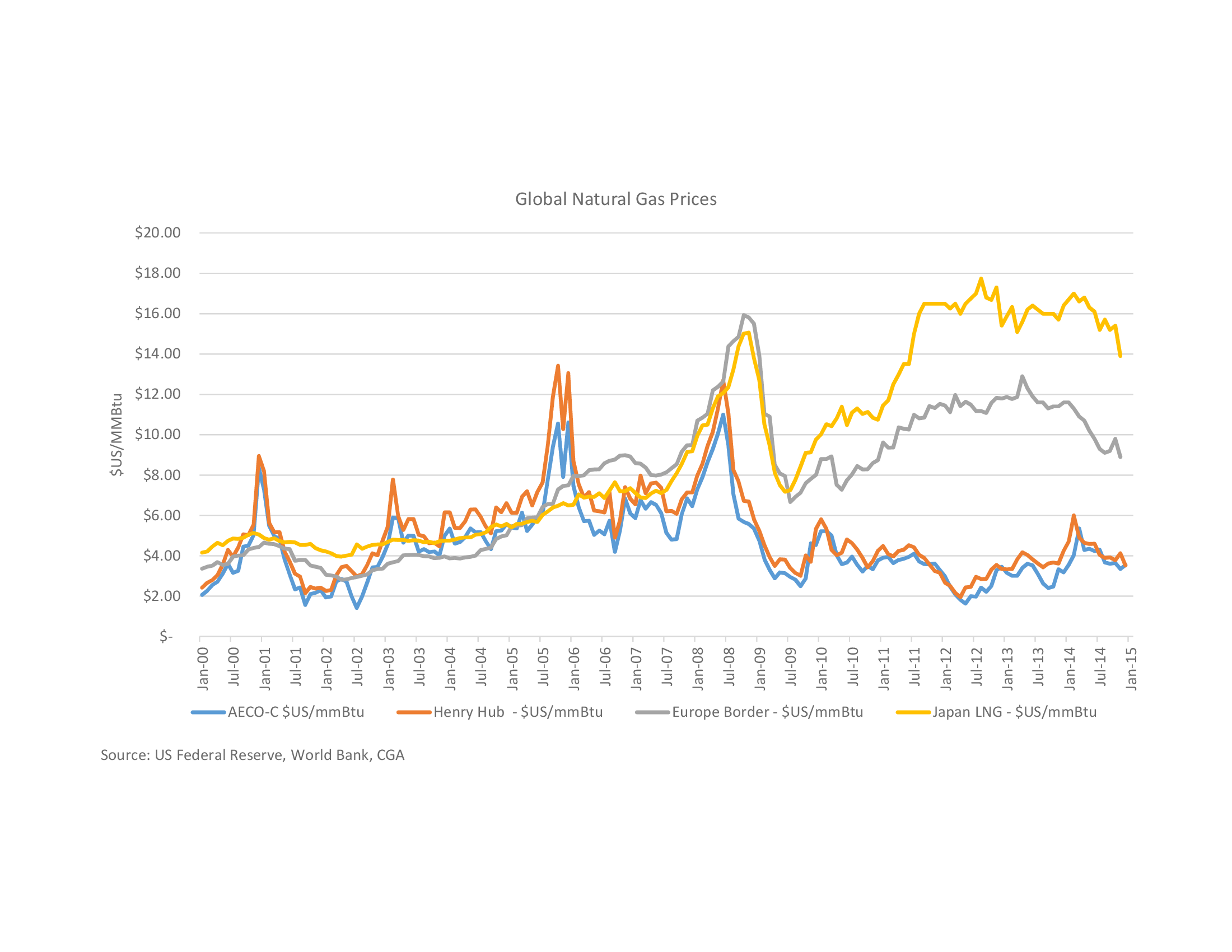
Chart-4-Global-Natural-Gas-Prices11

Source: Federal Reserve, World Bank, CGA

Here is an extract from the International Gas Union report – IGU Wholesale Gas Price Survey Report – 2014 Edition:-

Wholesale prices can obviously vary significantly from year to year, but the top two regions are Asia Pacific followed by Europe – both with average prices over $11.00. OPE* remains the primary pricing mechanism in Asia Pacific and still a key mechanism in Europe.

*Oil Price Escalation – in this type of contract, the price is linked, usually through a base price and an escalation clause, to competing fuels, typically crude oil, gas oil and/or fuel oil. In some cases coal prices can be used as can electricity prices.

Canada has significant Gas reserves and is actively developing Liquefied Natural Gas (LNG) capacity. 13 plant proposals are underway but exports are still negligible. It also produces significant quantities of Propane which commands a premium over Natural Gas as this chart shows: –
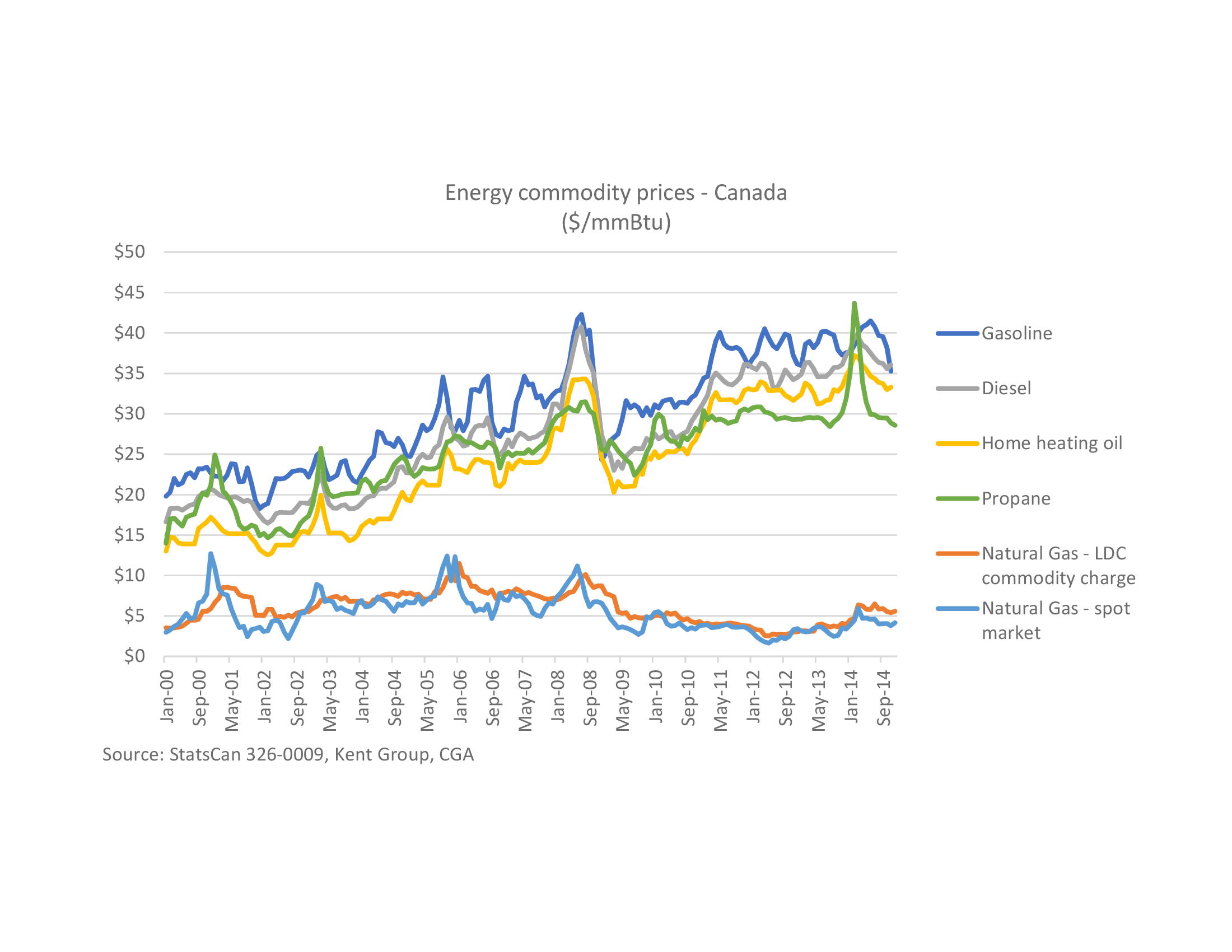
Chart-5-Energy-Commodity-Prices10

Source: StatsCan, Kent Group, CGA

Australia, by comparison, is already a major source of LNG production. The IGU – World LNG Report – 2014 Edition:-

Though Australia was the third largest LNG capacity holder in 2013, it will be the predominant source of new liquefaction over the next five years, eclipsing Qatari capacity by 2017. With Pluto LNG online in 2012, seven Australian projects are now under construction with a total nameplate capacity of 61.8 MTPA (53% of global under construction capacity).

Coal

Australia is the fourth largest Coal producer globally. According to the World Coal Association, it produced 459 Mt in 2013. Canada did not feature in the top 10. However when measured in terms of Coking Coal – used for steel production – Australia ranked second, behind China, at 158 Mt whilst Canada ranked sixth at 34 Mt.

The price of Australian Coal has been falling since January 2011 and is heading back towards the lows last seen in 2009, driven primarily by the weakness in demand for Coking Coal from China.
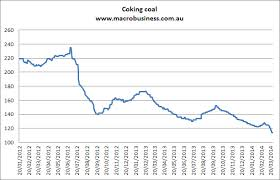
Australian Coal Price - Macro Business 2012 - 2014

Source: Macro Business

This is how the Minerals Council of Australia describes the Coal export market:-

Coal accounted for almost 13 per cent of Australia’s total goods and services exports in 2012-13 down from 15 per cent in 2011-12. This made coal the nation’s second largest export earner after iron ore. Over the last five years, coal has accounted, on average, for more than 15 per cent of Australia’s total exports – with export earnings either on par or greater than Australia’s total agricultural exports.

Australia’s metallurgical coal export volumes are estimated at 154 million tonnes in 2012-13, up 8.5 per cent from 2011-12. However, owing to lower prices the value of exports decreased by almost 27 per cent to be $22.4 billion in 2012-13.

Whilst the scale of the Coal industry in Canada is not so vast, this is how the Coal Association of Canada describes Canadian Coal production:-

Production

Canada produced 60 million close to 67 million tonnes (Mt) of coal in 2012. 31 million tonnes was metallurgical (steel-making) coal and 36 million tonnes (Mt) was thermal coal. The majority of coal produced in Canada was produced in Alberta and B.C.

Alberta produced 28.3 Mt of coal in 2012

British Columbia produced 28.8 Mt (most was metallurgical coal) – 43% of all production

To meet its rapid infrastructure growth and consumer demand for things such as vehicles and home appliances, Asia has turned to Canada for its high-quality steel-making coal. As Canada’s largest coal trading partner, coal exports to Asia accounted for 73% of total exports in 2010.

Steel-Making Coal

Global steel production is dependent on coal and more and more the world is turning to Canada for its supply of quality steel-making coal.

The production of steel -making coal increased by 5.5% from 29.5 Mt in 2011 to 31.1 Mt in 2012.

Almost all of Canada’s steel-making coal produced was exported.

Thermal Coal

Approximately 36 million tonnes of thermal coal was produced in 2012.

The vast majority of Canadian thermal coal produced is used domestically.

Currency Pressures

Until the autumn of 2014 the CAD was performing strongly despite weakness in several of its main export markets as the chart below of the Canadian Effective Exchange Rate (CERI) shows:-
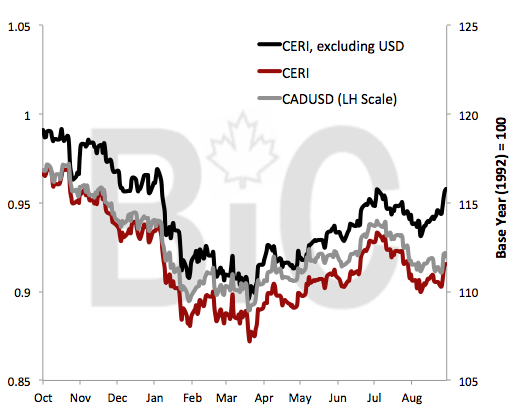
CAD CERI - 1yr to sept 2014

Source: Business in Canada, BoC

Since September the CERI index has declined from around 112 to below 100.

For Australia the weakening of their trade weighted index has been less extreme due to less reliance on the US. There is a sector of the RBA website devoted the management of the exchange rate, this is a chart showing the Trade Weighted Index and the AUDUSD rate superimposed (RHS):-
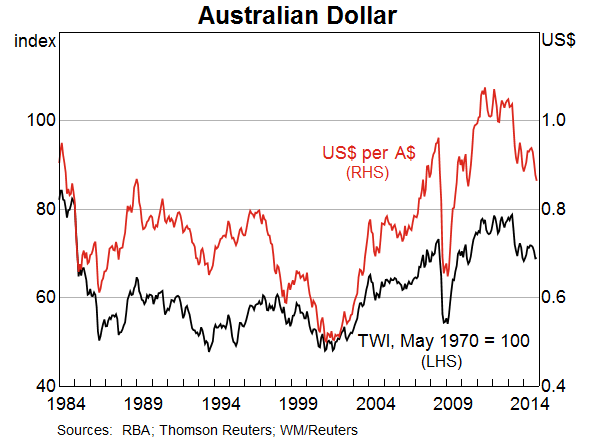
AUD_effective_and_AUDUSD_-_RBA

Source: RBA, Reuters

Taking a closer look at the monthly charts for USDCAD:-
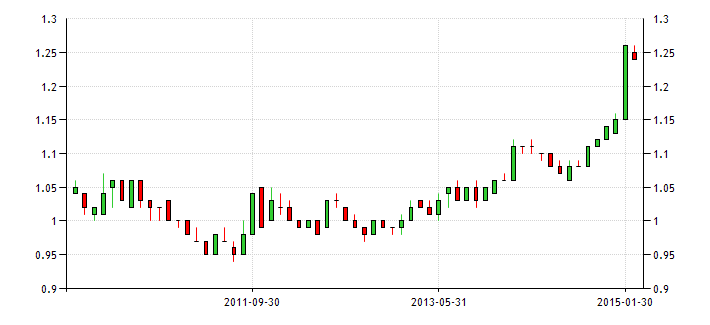
canada-currency

Source: Trading Economics

And AUDUSD:-
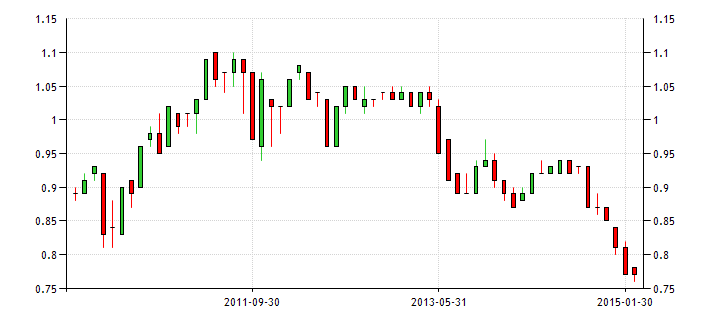
australia-currency

Source: Trading Economics

These charts show the delayed reaction both currencies have had to the decline in the price of their key export commodities – they may fall further.

Central Bank Policy

The chart below shows the evolution of BoC and RBA policy since 2008. Australian rates are on the left hand scale (LHS), Canadian on the right:-
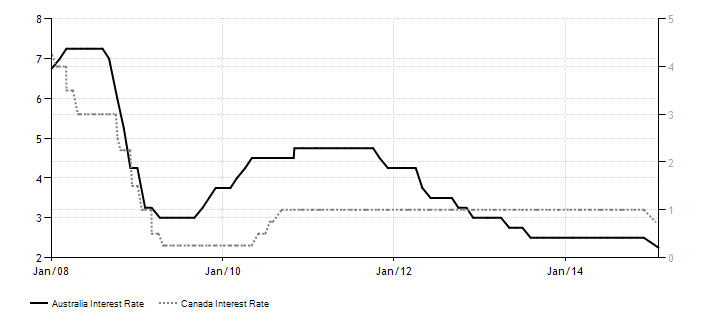
australia and canadian -interest-rate 2008 - 2015

Source: Trading Economics

To understand the sudden change in currency valuation it is worth reviewing the central banks most recent remarks.

The BoC expect Oil to average around $60/barrel in 2015. Here are some of the other highlights of the latest BoC monetary policy report:-

The sharp drop in global crude oil prices will be negative for Canadian growth and underlying inflation.

Global economic growth is expected to pick up to 3 1/2 per cent over the next two years.

Growth in Canada is expected to slow to about 1 1/2 per cent and the output gap to widen in the first half of 2015.

Canada’s economy is expected to gradually strengthen in the second half of this year, with real GDP growth averaging 2.1 per cent in 2015 and 2.4 per cent in 2016, with a return to full capacity around the end of 2016, a little later than was expected in October.

Total CPI inflation is projected to be temporarily below the inflation-control range during 2015 because of weaker energy prices, and to move back up to target the following year. Underlying inflation will ease in the near term but then return gradually to 2 per cent over the projection horizon.

On 21 January 2015, the Bank announced that it is lowering its target for the overnight rate by one-quarter of one percentage point to 3/4 per cent.

…Although there is considerable uncertainty around the outlook, the Bank is projecting real GDP growth will slow to about 1 1/2 per cent and the output gap to widen in the first half of 2015. The negative impact of lower oil prices will gradually be mitigated by a stronger U.S. economy, a weaker Canadian dollar, and the Bank’s monetary policy response. The Bank expects Canada’s economy to gradually strengthen in the second half of this year, with real GDP growth averaging 2.1 per cent in 2015 and 2.4 per cent in 2016.

The RBA Statement on Monetary Policy – February 2015 provides a similar insight into the concerns of the Australian central banks:-

…Australia’s MTP growth is expected to continue at around its pace of recent years in 2015 as a number of effects offset each other. Growth in China is expected to be a little lower in 2015, while growth in the US economy is expected to pick up further. The significant fall in oil prices, which has largely reflected an increase in global production, represents a sizeable positive supply shock for the global economy and is expected to provide a stimulus to growth for Australia’s MTPs. The fall in oil prices is also putting downward pressure on global prices of goods and services. Other commodity prices have also declined in the past three months, though by much less than oil prices. This includes iron ore and, to a lesser extent, base metals prices. Prices of Australia’s liquefied natural gas (LNG) exports are generally linked to the price of oil and are expected to fall in the period ahead. The Australian terms of trade are expected to be lower as a result of these price developments, notwithstanding the benefit from the lower price of oil, of which Australia is a net importer.

…Available data since the previous Statement suggest that the domestic economy continued to grow at a below-trend pace over the second half of 2014. Resource exports and dwelling investment have grown strongly. Consumption growth remains a bit below average. Growth of private non-mining business investment and public demand remain subdued, while mining investment has fallen further. Export volumes continued to grow strongly over the second half of 2014, driven by resource exports. Australian production of coal and iron ore is expected to remain at high levels, despite the large fall in prices over the past year. The production capacity for LNG is expected to rise over 2015. Service exports, including education and tourism, have increased a little over the past two years or so and are expected to rise further in response to the exchange rate depreciation.

…Household consumption growth has picked up since early 2013, but is still below average. Consumption is being supported by very low interest rates, rising wealth, the decision by households to reduce their saving ratio gradually and, more recently, the decline in petrol prices. These factors have been offset to an extent by weak growth in labour income, reflecting subdued conditions in the labour market. Consumption growth is still expected to be a little faster than income growth, which implies a further gradual decline in the household saving ratio.

…Prior to the February Board meeting, the cash rate had been at the same level since August 2013. Interest rates faced by households and firms had declined a little over this period. Very low interest rates have contributed to a pick-up in the growth of non-mining activity. The recent large fall in oil prices, if sustained, will also help to bolster domestic demand. However, over recent months there have been fewer indications of a near-term strengthening in growth than previous forecasts would have implied. Hence, growth overall is now forecast to remain at a below trend pace somewhat longer than had earlier been expected. Accordingly, the economy is expected to be operating with a degree of spare capacity for some time yet, and domestic cost pressures are likely to remain subdued and inflation well contained. In addition, while the exchange rate has depreciated, it remains above most estimates of its fundamental value, particularly given the significant falls in key commodity prices, and so is providing less assistance in delivering balanced growth in the economy than it could.

Given this assessment, and informed by a set of forecasts based on an unchanged cash rate, the Board judged at its February meeting that a further 25 basis point reduction in the cash rate was appropriate. This decision is expected to provide some additional support to demand, thus fostering sustainable growth and inflation outcomes consistent with the inflation target.

Real Estate

Neither central bank makes much reference to the domestic housing market. Western Canada has been buoyed by international demand from Asia. Elsewhere the overvaluation has been driven by the low interest rates environment. Overall prices are 3.1% higher than December 2014. Vancouver and Toronto are higher but other regions are slightly lower according to the January report from the Canadian Real Estate Association . The chart below shows the national average house price:-
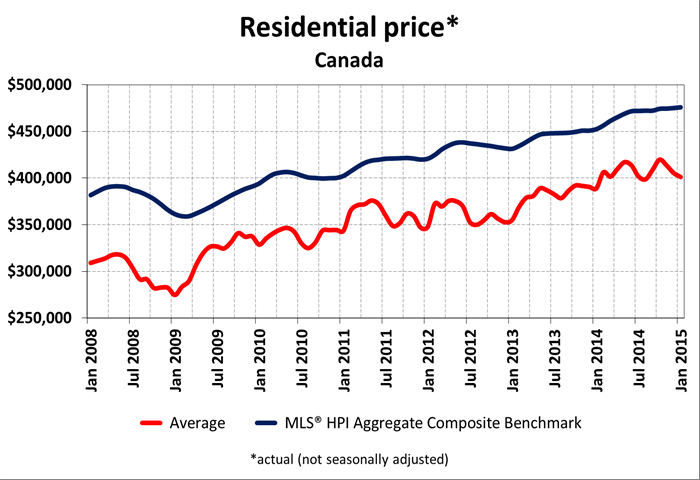


Canada natl_chartA04_hi-res_en

Source: Canadian Real estate Association

The Australian market has moderated somewhat during the last 18 months, perhaps due to the actions of the RBA, raising rates from 3% to 4.75% in the aftermath of the Great Recession, however, the combination of lower RBA rates since Q4 2011, population growth and Chinese demand has propelled the market higher once more. Prices in Western Australia have moderated somewhat due to the fall in commodity prices but in Eastern Australia, the market is still making new highs. The chart below goes up to 2014 but prices have continued to rise, albeit moderately (less than 2% per quarter) since then:-
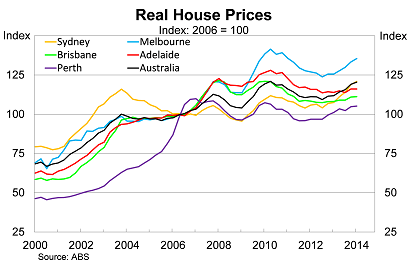
Australian House Prices 2006 - 2014

Source: ABS

This chart from the IMF/OECD shows global Price to Income ratios, Canada and Australia are still at the expensive end of the global range:-
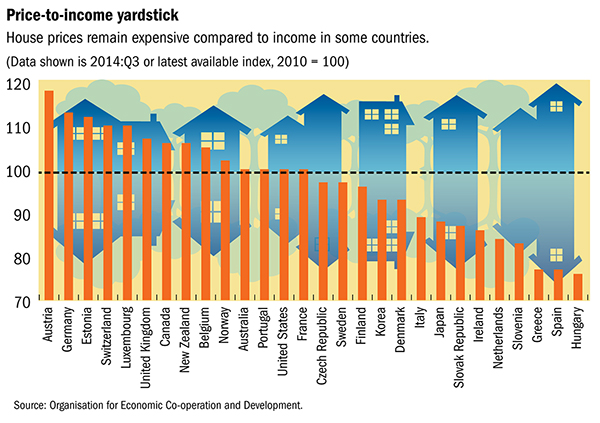
House pricetoincome IMF

Source: IMF and OECD

The lowering of official rates by the BoC and RBA will not help to alleviate the overvaluation.

Bonds

This chart shows the monthly evolution of 10 year Government Bond yields since 2008 in Australia (LHS) and Canada (RHS):-
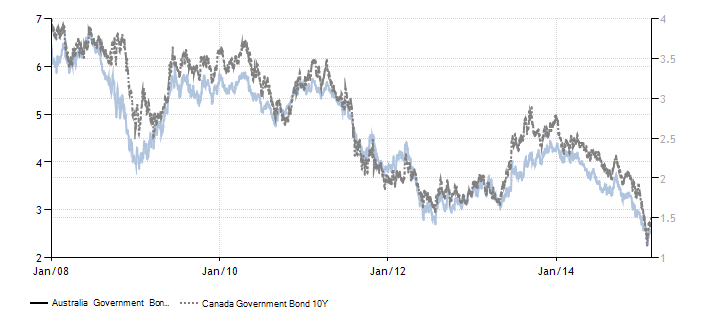
australia-canada-government-bond-yield

Source: Trading Economics

Whilst the two markets have moved in a correlated manner Canadian yields have tended to be between 300 and 100 bp lower over the last seven years. The Australian yield curve is flatter than the Canadian curve but this is principally a function of higher base rates. Both central banks have cut rates in anticipation of lower inflation and slower growth. This is likely to support the bond market in each country but investors will benefit from the more favourable carry characteristics of the Canadian market.

Stocks  

To understand the differential performance of the Australian and Canadian stocks markets I have taken account of the strong performance of commodity markets prior to the Great Recession, in the chart below you will observe that both economies benefitted significantly from the rally in industrial commodities between 2003 and 2008. Both stock markets suffered severe corrections during the financial crisis but the Canadian market has steadily outperformed since 2010:-
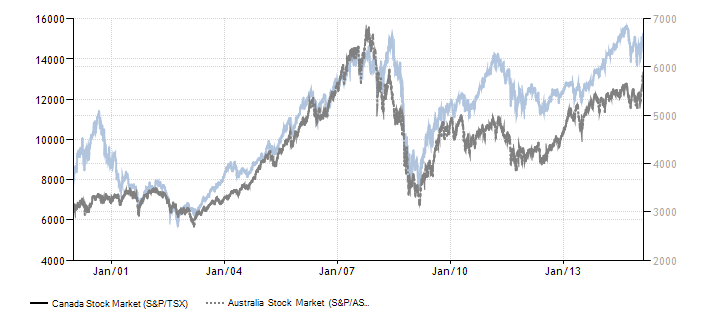
canada australian -stock-market 2000-2015

Source Trading Economics

This outperformance may have been due to Canada’s proximity to, and reliance on, the US – 77% of Exports and 52% of Imports. The Australian economy, by contrast, is reliant on Asia for exports – China 27%, Japan 17% – however, I believe that the structurally lower interest rate regime in Canada is a more significant factor.

Conclusions and investment opportunities

With industrial commodity prices remaining under pressure neither Canada nor Australia is likely to exhibit strong growth. Inflation will be subdued, unemployment may rise. These are the factors which prompted both central banks to cut interest rates in the last month. However, both economies have been growing reasonable strongly when compared with countries such as those of the Eurozone. Canada GDP 2.59%, Australia GDP 2.7%.

The BoC has little room for manoeuvre with the base rate at 0.75% but the RBA is in a stronger position. For this reason I believe the AUD is likely to weaken against the CAD if world growth slows, but the negative carry implications of this trade are unattractive.

Canadian Real Estate is more vulnerable than Australia to any increase in interest rates – although this seems an unlikely scenario in the near-term – more importantly, in the longer term, Canadian demographics and slowly population growth should alleviate Real Estate demand pressure. In Australia these trends are working in the opposite direction. Neither Real Estate market is cheap but Australia remains better value.

The Australian All-Ordinaries should outperform the Canadian TSX as any weakness in the Australian economy can be more easily supported by RBA accommodation. The All-Ordinaries is also trading on a less demanding earnings multiple than the TSX.

The RBA’s greater room to ease monetary conditions should also support the Australian Government Bond market, added to which the Australian government debt to GDP ratio is an undemanding 28% whilst Canadian debt to GDP is at 89%. The Canadian curve may offer more carry but the RBA ability to ease policy rates is greater. My preferred investment is in Australian Government Bonds. Both Canadian and Australian 10 year yields have risen since the start of February. The last Australian bond retracement saw yields rise 46 bp to 3.75% in September 2014. Since the recent rate cut yields have risen 30 bp to a high of 2.67% earlier this week. Don’t wait too long for better levels.

Where is the oil price heading in 2015?

400dpiLogo

Macro Letter – Supplemental – No 1 – 13-02-2015

Where is the oil price heading in 2015?

  • Growth in oil demand remains anaemic
  • Supply will gradually fall as contracts expire
  • Consolidation and declining volatility are the most likely outcome

The price of crude oil has rebounded strongly since the end of January. Is this the beginning of a new trend, a short-term correction prior to a further decline or the start of a period of consolidation?

Here is the price action for March 2015 WTI futures over the last four months:-

4month Mar15 WTI

Source: Barchart.com

Before jumping to any conclusions about the next trend it is worth taking a look at a longer term chart. This is the spot price chart for the period since 2005, it shows the period of the leveraged boom and the collapse during the Great Recession:-

10yr Oil

Source: Barchart.com

The collapse during the Great Recession was largely due to a reduction in demand as the world economy slowed dramatically. The price decline since the summer of 2014 has been driven by a combination of a delayed reaction to increased supply – specifically from the US – and a moderation in the rate of increase in demand associated with the slowing of Chinese growth and its policy of “rebalancing” towards domestic consumption. An additional factor has been the slowing of growth in Europe. An IEA report last December estimated that global oil demand had increased by only 0.75% between 2013 and 2014 – better, by 3.6%, than the 2009/2013 period but not excessive.

During 2013 and early 2014 geopolitical tension in the Middle East and Ukraine kept prices elevated amid expectations of supply disruptions. These disruptions failed to materialise. This coincided with an increase in US oil production. Finally the markets woke-up to the lack of geopolitical risk, the slowdown of growth in the EU and China, and the acceleration in US production. The price began to correct downwards taking out the 2012 lows. From here on it gathered momentum and, having taken out the majority of trading stop-losses, stabilised last month, not far from the 2009 lows.

Another look at the 10 year price chart shows the recovery in 2010/2011. At this stage the improvements in fracking and drilling technology were already becoming widely known, had it not been for geopolitical concerns the price would probably have begun to decline from this point – around $85. The widening price spread between Brent Crude and WTI shows the effect of increased US production:-

brent wti spread Goldman Sachs ZeroHedge

Source: Goldman Sachs and Zero Hedge

WTI begins to lag Brent Crude towards the end of 2010. Here is a chart of US versus World Oil production:-

US_vs_world_Oil_production

Source: EIA and Carpe Diem Blog


Price Prospects

What we have seen during the last six months is a delayed reaction to the increased supply of crude oil from the US. The recent decline has been very rapid and may have run its course, or may have further to fall. Either way, volatility is heightened and the price is likely to remain variable.

From a technical perspective I would expect the corrective rally to continue possibly to test the 2012 lows around $75/barrel. After such a rapid rise in the last few weeks, however, the price may retest the low first; there is an outside chance that the market takes out the January low to retest the 2009 bottom. The $75 level may be retested in the autumn as forward contracts expire and supply shortages appear. From this point a renewed decline is most likely, this phase will also be marked by declining volatility.

I have one concern with this technically bullish prediction – the steep contango in the futures market. At close of business on Wednesday 11th February the WTI futures settlements were as follows:-

Contract Last
CLY00 (Cash) 48.87s
CLH15 (Mar ’15) 50.43
CLU15 (Sep ’15) 57.15
CLH16 (Mar ’16) 60.14s
CLU16 (Sep ’16) 62.39s


Source: NYMEX and Barchart.com

The shape of the forward curve suggests that oil producers are not feeling quite as much pain as is implied by the spot price, the supply overhang may last into 2016.

Market views, as always, vary. At this week’s International Petroleum Week conference in London Igor Sechin – CEO of Rosneft predicted that oil prices may surge later this year due to supply shortages as a result of the precipitous decline. Meanwhile at the same conference Ian Taylor – CEO of Vitoil, questioned where oil demand would emanate from. His outlook was decidedly more bearish.

Moody’s research, published earlier this week, put a price target for 2015 is $55/barrel which makes sense if global growth slows: they see no boost to growth in China, Japan or the EU from a lower oil price but expect it to benefit India and the US.

I listened to a panel debate at the ICMA/JSDA – Japan Securities Summit on Wednesday where Takahiro Sato of the BoJ alluded to the positive impact lower oil prices might have on Japanese growth. He inferred that it would mean the BoJ undershot its inflation target. Here is a brief extract:-

On the price front, the inflation rates in major countries, including Japan, have been declining as a trend mainly due to the recent drop in crude oil prices. Under those circumstances, central banks in major countries have a common concern that major economies are trapped in a feedback-loop — the decline in the inflation rates would lead to a fall in people’s medium- to long-term inflation expectations, and it would result in a further decline in the actual inflation rates. That is why the Bank decided to expand the QQE last October.

As I cast a dissenting vote on that decision, I may not be an appropriate person to explain this policy.

The NY Times reported – KKR profits were down 89% in Q4 2014 due to turmoil in the US energy sector. New drilling has dried up in the last few months and concerns are growing about potential defaults by over-leveraged energy companies. This could slow US growth if the financial sector is wracked with contagion.

The prospects for the oil price is unclear; it will remain so for the next six months. For this reason I expect Moody’s price target of $55/barrel to be reasonably accurate even if their growth expectations prove wrong.

Obvious risk factors which could undermine my expectations include:-

  1. A dramatic slowdown in China
  2. An unravelling of the Eurozone currency union
  3. Russia and the US going head to head in the Ukraine

I think China is more likely to surprise on the upside if it does surprise at all. The Eurozone is still a difficult situation to predict but I think the Euro currency will survive and lower oil prices will aid Germany among other countries in the Euro area. The US may be performing well economically but its appetite for foreign conflict when the country is heading towards energy independence makes little strategic sense. They are likely to deploy their resources on dealing with ISIS first.

My 2015 outside range for WTI crude oil is $40 to $75 with an average of $55/barrel.

Swiss National Bank policy and its implications for currencies, assets and central banking

400dpiLogo

Macro Letter – No 29 – 06-02-2015

Swiss National Bank policy and its implications for currencies, assets and central banking

  • The SNB unpegged from the Euro and sustained balance sheet losses, they will survive
  • The Euro has been helped lower but rumours of a new SNB target are rife
  • The long run appreciation of the Swiss Franc (CHF) is structural and accelerating, the Swiss economy will adjust
  • If G7 central bank balance sheets expanded to Swiss levels, relative to GDP, QE would triple

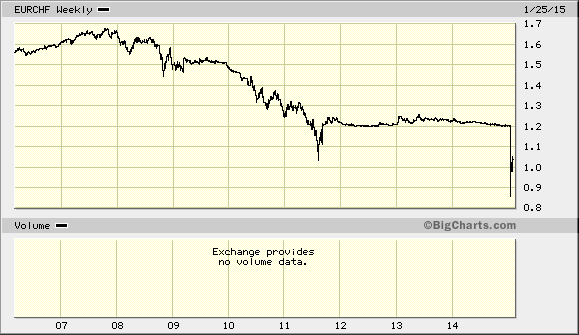
On Thursday 15th January the Swiss National Bank (SNB) finally, and unexpectedly, threw in the towel and ceased their foreign exchange intervention to maintain a pegged rate of EURCHF 1.20. The cap was introduced in September 2011 after a 28% appreciation in the CHF since the beginning of the Great Financial Crisis (GFC) – from 1.68 to 1.20. After plumbing the depths of 0.85 the EURCHF rate settled at 0.99 – around 18% higher in a single day. This is a huge one day move for a G10 currency and has inflicted collateral damage on leveraged traders, their brokers and those who borrowed in CHF to finance asset purchases in other currencies. Citibank estimates that is has also cost the SNB CHF 60bln. Here is a 10 year chart of EURCHF: –

EURCHF_10_yr

Source: Bigcharts.com

The Swiss SMI stock Index declined from 9259 to 8400 (-9.2%) whilst the German DAX Index rose from 9933 to 10,032 (+1.1%). Swiss and German bond yields headed lower. Swiss bonds now exhibit negative nominal yields out to 15 years – the table below is from Wednesday 4th February:-

Maturity Yield
1 week -1.35
1 month -1.65
2 month -1.55
3 month -1.4
6 month -1.38
1 year -1.11
2 year -0.823
3 year -0.768
4 year -0.632
5 year -0.505
6 year -0.419
7 year -0.305
8 year -0.257
9 year -0.181
10 year -0.111
15 year -0.024
20 year 0.196


Source: Investing.com

Swiss inflation is running at -0.3% so the real-yields are fractionally better due to the mild deflation seen in the past couple of months. I expect this deflation to deepen and persist.

Thomas Jordan – Chairman of the governing board of the SNB – made the following statement at a press conference which accompanied the SNB decision:-

Discontinuation of the minimum exchange rate

The Swiss National Bank (SNB) has decided to discontinue the minimum exchange rate of CHF 1.20 per euro with immediate effect and to cease foreign currency purchases associated with enforcing it. The minimum exchange rate was introduced during a period of exceptional overvaluation of the Swiss franc and an extremely high level of uncertainty on the financial markets. This exceptional and temporary measure protected the Swiss economy from serious harm. While the Swiss franc is still high, the overvaluation has decreased as a whole since the introduction of the minimum exchange rate. The economy was able to take advantage of this phase to adjust to the new situation. Recently, divergences between the monetary policies of the major currency areas have increased significantly – a trend that is likely to become even more pronounced. The euro has depreciated substantially against the US dollar and this, in turn, has caused the Swiss franc to weaken against the US dollar. In these circumstances, the SNB has concluded that enforcing and maintaining the minimum exchange rate for the Swiss franc against the euro is no longer justified.

Interest rate lowered

At the same time as discontinuing the minimum exchange rate, the SNB will be lowering the interest rate for balances held on sight deposit accounts to –0.75% from 22 January. The exemption thresholds remain unchanged. Further lowering the interest rate makes Swiss-franc investments considerably less attractive and will mitigate the effects of the decision to discontinue the minimum exchange rate. The target range for the three-month Libor is being lowered by 0.5 percentage points to between –1.25% and –0.25%.

Outlook for inflation and the economy

The inflation outlook for Switzerland is low. In December we presented a conditional inflation forecast, which predicts inflation of –0.1% for this year. Since this forecast was published, the oil price has once again fallen significantly, which will further dampen the inflation outlook for a time. However, lower oil prices will stimulate growth globally, and this will influence economic developments in Switzerland positively. Swiss franc exchange rate movements also impact inflation and the economic situation.

The SNB remains committed to its mandate of ensuring medium-term price stability while taking account of economic developments. In concluding, let me emphasise that the SNB will continue to take account of the exchange rate situation in formulating its monetary policy in future. If necessary, it will therefore remain active in the foreign exchange market to influence monetary conditions.

On Tuesday 27th January the CHF fell marginally after SNB Vice President Jean-Pierre Danthine told Swiss newspaper Tages Anzeiger – Die Presse war voller Spekulationen, that the SNB remains ready to intervene in the currency market. One comment worthy of consideration, with apologies for the “google-translate”, is:-

Q. Does the SNB did not develop a new monetary policy? Just as Denmark, which has tied its currency to the euro in 30 years? Or as Singapore, which manages its currency based on a trade-weighted basket of currencies?

A. Denmark is the euro zone financially and politically closer than Switzerland. The binding to Europe is a long standing. Means that this solution is for Switzerland hardly considered. The arrangement of Singapore is worthy of consideration. But what is decisive is the long-term. Apart from Switzerland and other small and open economies such as Sweden and Norway are done well over the years with a flexible exchange rate.

Rumours of a new unofficial corridor of EURCHF 1.05-1.10 are now circulating – strikingly similar to the level reached prior to the September 2011 peg.

Breaking the Bank

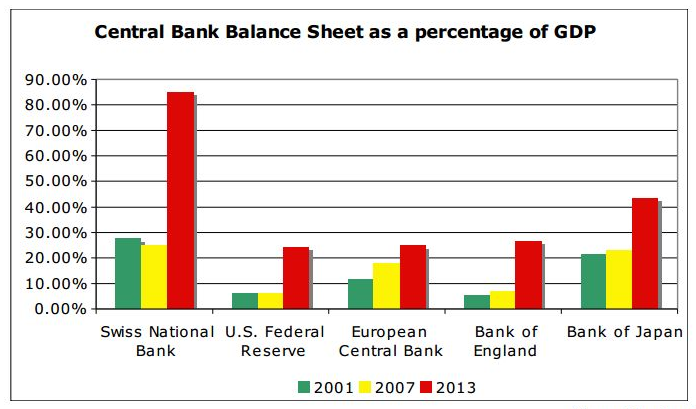
Another rumour to have surfaced after the currency move was that the SNB had become concerned about the size of their balance sheet relative to Swiss GDP. The chart below is from 2013 but it shows the relative scale of SNB QE:-

Central Bank Balance-of-percentage-GDP - source SNB

Source: SNB and snbchf.com

Estimates of the loss sustained by the SNB, due to the appreciation of the CHF, vary, but, rather like countries, central banks don’t tend to “go bust”. The Economist – Broke but never Bust takes up the subject (my emphasis in bold):-

…For one thing central banks are far bigger. Between 2006 and 2014 central-bank balance-sheets in the G7 jumped from $3.4 trillion to $10.5 trillion, or from 10% to 25% of GDP. And the assets they hold have changed. The SNB, aiming to protect Swiss exporters from an appreciating currency, has built up a huge stock of euros, bought with newly created francs.

…Bonds that paid 5% or more ten years ago now yield nothing, and other investments have performed badly (the SNB was stung by a drop in the value of gold in 2013 and cut its dividend to zero). Concerned that its euro holdings might lose value the SNB shocked markets on January 15th by abruptly ending its euro-buying spree.

…With capital of €95 billion supporting a €2.2 trillion balance-sheet, the Eurosystem (the ECB and the national banks that stand behind it) is 23 times levered; a loss of 4% would wipe out its equity. Since two central banks have suffered devastating crunches recently (Tajikistan in 2007, Zimbabwe in 2009) the standard logic seems to apply: capital-eroding losses must be avoided.

But the worries are overdone. For one thing central banks are healthier than they appear. On top of its equity, the Eurosystem holds €330 billion in additional reserves. These funds are designed to absorb losses as assets change in value. Even if the ECB were to buy all available Greek debt—around €50 billion—and Greece were to default, the system would lose just 15% of these reserves; its capital would not be touched.

And even if a central bank’s equity were wiped out it would not go bust in the way high-street lenders do. With liabilities outweighing its assets it might seem unable to pay all its creditors. But even bust central banks retain a priceless asset: the power to print money. Customers’ deposits are a claim on domestic currency, something the bank can create at will. Only central banks that borrow heavily in foreign currencies they cannot mint (as in Tajikistan) or in failing states (Zimbabwe) get into deep trouble.

The Economist goes on to highlight the risk that going “cap in hand” to their finance ministries will weaken central banks’ “independence” and might prove inflationary. In the current environment inflation would be a nice problem for the SNB, or, for that matter, the ECB or BoJ to have. As for the limits of central bank balance sheet expansion, the SNB – at 80% of GDP – have blazed a trail for their larger peers to follow.

Is it the money supply?

A further unofficial explanation of the SNB move concerns the unusually large expansion of Swiss money supply since the GFC. In early January an article from snbchf.comThe Risks on the Rising SNB Money Supply discussed how the SNB might be thinking (my emphasis): –

Since the financial crisis central banks in developed nations increased their balance sheets. The leading one was the American Federal Reserve that increased the monetary base (“narrow money”), followed by the Bank of Japan and recently the ECB. Only partially the extension of narrow money had an effect on banks’ money supply, so called “broad money”. For the Swiss, however, the rising money supply concerns both narrow and broad money. Broad money in Switzerland rises as strong as it did in Spain or Ireland before the financial crisis.

They go on to discuss the global effects of QE:-

…The SNB had the choice between a stronger currency and, secondly, an excessive appreciation of the Swiss assets.  With the introduction of the euro floor, it opted for the second alternative and increased its monetary base massively in order to absorb foreign currency inflows. Implicitly the central bank helped to push up asset prices even further. Hence it was rather foreign demand for Swiss assets that helped to increase the demand for credit and money in the real economy.

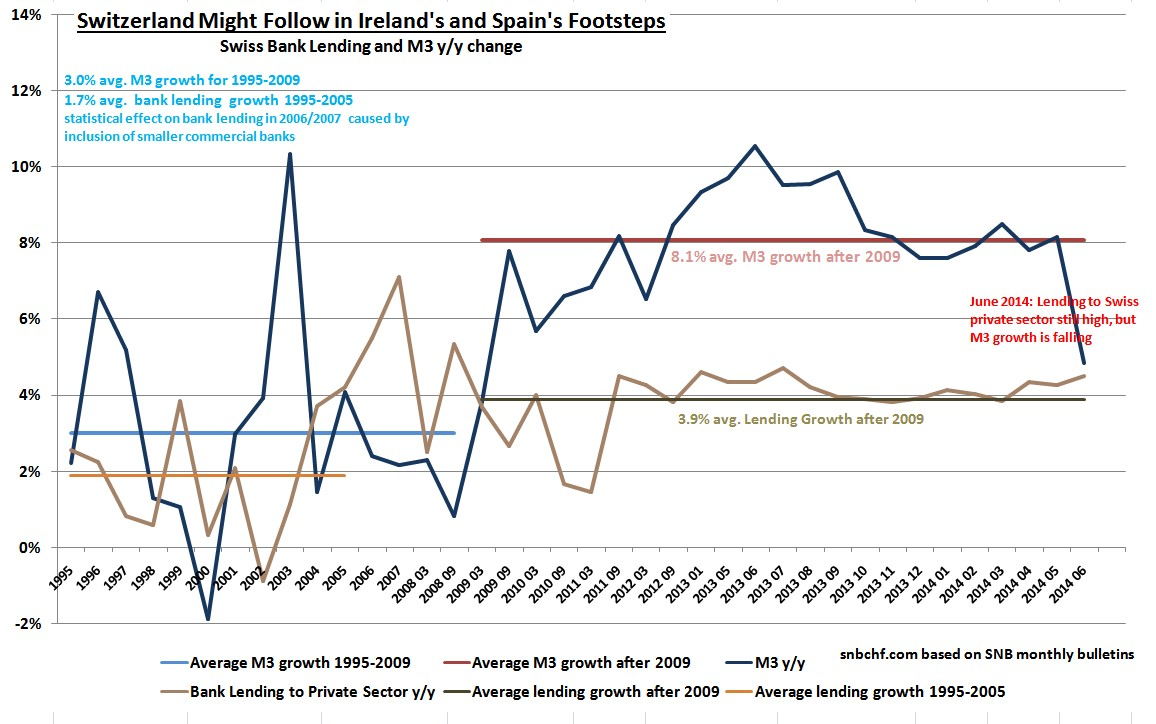
…The SNB printed a lot of money especially in the years before and just after the euro introduction until 2003, to weaken the franc and the “presumed slow” Swiss growth. The money increase, however, did not affect credit growth more than it should have: investors preferred other countries to Switzerland to buy assets. Finally the central bank increased interest rates a bit and reduced money supply between 2006 and 2008. Be aware that in 2006/2007 there is a statistical effect with the inclusion of “Raiffeisen” group banks into M3. Since 2009, things have changed M3 is rising with an average of 7.7% per year, while before 2009 it was 3% per year. Banking lending to the private sector is increasing by 3.9% per year while it was 1.7% between 1995 and 2005.

…Since April 2014, money supply M3 has suddenly stopped at around 940 billion CHF. Before it had increased by 80 bln. CHF per year from 626 bln. in each year since 2008.  We explained before that Fed’s QE translated in higher lending in dollars, dollars that found their way into emerging markets. The same thing happens in Switzerland with newly created Swiss francs. Not all of them remained in the Swiss economy, but they were loaned out to clients from Emerging Markets. Hence the second risk does not directly concerns the Swiss economy and the euro, but the relationship between its banks and emerging markets and the risks of a strong franc for banks’ balance sheets.


Here is a chart of M3 and bank lending in Switzerland, the annotation is from snbchf.com:-

Swiss-M3-and-Lending-2014-Ireland

Source: SNB and snbchf.com

The SNBs decision to unpeg seems a brutal way to impose discipline on the domestic lending market and an unusual way to test increased bank capital requirements, however, I believe this was the least bad time to escape from the corner into which they had boxed themselves. The recent fall in M3 should put some upward pressure on the CHF – until growth slows and reverses the process.

The SNB said this about money supply and bank lending in their Q4 2014 Quarterly Bulletin (my emphasis):-

Growth in money supply driven by lending

The expansion of the money supply witnessed since the beginning of the financial and economic crisis is mainly attributable to bank lending. An examination of components of the M3 monetary aggregate and its balance sheet counterparts, based on the consolidated balance sheet of the banking sector, shows that approximately 70% of the increase in the M3 monetary aggregate between October 2008 and October 2014 (CHF 311 billion) was attributable to the increase in domestic Swiss franc lending (CHF 216 billion). The remaining 30% of the M3 increase was due in part to households and companies switching their portfolio holdings from securities and foreign exchange into Swiss franc sight deposits.

Stable mortgage lending growth in the third quarter

In the third quarter of 2014 – as in the previous quarter – banks’ mortgage claims, which make up four-fifths of all domestic bank lending, were up 3.8% year-on-year. Mortgage lending growth thus continued to slow, as it has for some time now, despite the fact that mortgage rates have fallen to a historic low. A breakdown by borrower shows that the growth slowdown has taken place in mortgage lending to households as well as companies.

This slower growth in mortgage lending may be attributed to various measures taken since 2012 to restrain the banks’ appetite for risk and strengthen their resilience. These include the banks’ own self-regulation measures, which subject mortgage lending to stricter minimum requirements. Moreover, at the request of the SNB, the Federal Council activated the countercyclical capital buffer in 2013 and increased it this year. This obliges the banks to back their mortgage loans on residential property with additional capital. The SNB’s bank lending survey also indicates that lending standards have been tightened and demand for loans among households and companies has declined.

…Growing ratio of bank lending to GDP

The strong growth in bank lending recorded in recent years is reflected in the ratio of bank loans to nominal GDP. After a sharp rise in the 1980s, this ratio remained largely unchanged until mid-2008. Since the onset of the financial and economic crisis, it has increased again substantially. This increase suggests that banks’ lending activities have supported aggregate demand. However, strong lending growth also entails risks for financial stability. In the past, excessive growth in lending has often been the root cause of later difficulties in the banking industry.

Switzerland’s banking sector is truly multi-national, deposits continue to arrive, despite penal “negative” rates, meanwhile, many CHF bank loans have been made to international clients. The sharp appreciation of the CHF will force the banking sector to make additional provisions for non-performing international loans. Further analysis of the effect of relative money supply growth, between Switzerland and the Eurozone (EZ) on the EURCHF exchange rate, can be found in this post by Frank Shostak – Post Mortem on the Swiss Franc’s Euro-Peg. He makes an interesting “Austrian” case for a weakening of the CHF versus the EUR over-time.

Swiss Francs in the long run

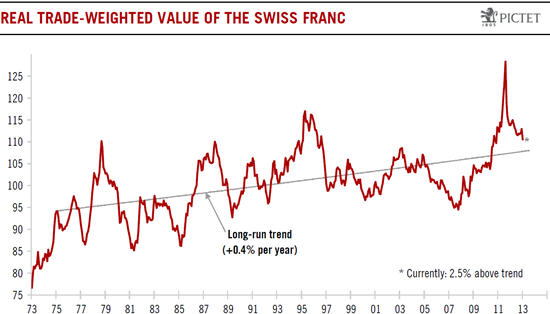
My first ever journey outside the UK was to Switzerland, that was back in 1971 when a pound sterling bought CHF 10.5. The Swiss economy has had to deal with a constantly rising exchange rate ever since. The chart below of the CHF Real Trade-Weighted value shows this most clearly: –

Real_Effective_CHF_Exchange_rate_EURCHF18_01_2013-

Source: Pictet

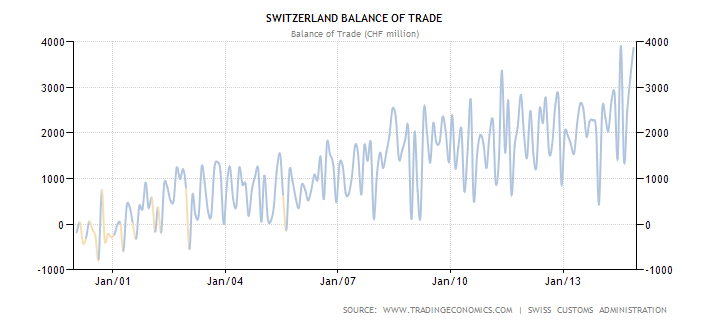
This chart only goes up to mid-2013, since then the USDCHF has moved from 0.88 and 0.99 by early January – after the unpegging the rate is near to its mid-point at 0.93. According to the Guardian – What a $7.54 Swiss Big Mac tells us about global currencies – the Swiss currency is now 33% overvalued. Exporters will be hit hard and the financial sector is bound to be damaged by commercial bank lending policies associated with pegging the CHF to a declining EUR. On Monday Bank Julius Baer (BAER.VX) announced plans to cut costs by CHF 100mln, domestic job cuts were also indicated – more institutions are sure to follow their lead. Meanwhile, there are bound to be emerging market borrowers which default. The Swiss economy will slow, exacerbating deflationary forces, but lower prices will improve the purchasing power of the domestic population. Switzerland’s trade balance hit a record high in July 2014 and came close to the same level in November:-

switzerland-balance-of-trade

Source: Trading Economics and Swiss Customs

In a recent newsletter – The Swiss Release the Kraken – John Maudlin quoted fellow economist Charles Gave in a tongue in cheek assessment of the SNB’s action:-

They [the SNB] didn’t mind pegging the Swiss franc to the Deutsche mark, but it is becoming more and more obvious that the euro is more a lira than a mark. A clear sign is the decline of the euro against the US dollar.

Mr. Draghi has been trying to talk the euro down for at least a year. This should not come as a surprise. After all, in the old pre-euro days, every time Italy had a problem, the solution was always to devalue.

But the Swiss, not being as smart as the Italians, do not believe in devaluations. You see, in Switzerland they have never believed in the ‘euthanasia of the rentier’, nor have they believed in the Keynesian multiplier of government spending, nor have they accepted that the permanent growth of government spending as a proportion of gross domestic product is a social necessity. The benighted Swiss, just down from their mountains where it was difficult to survive the winters, have a strong Neanderthal bias and have never paid any attention to the luminaries teaching economics in Princeton or Cambridge. Strange as it may seem, they still believe in such queer, outdated notions as sound money, balanced budgets, local democracy, and the need for savings to finance investments. How quaint!

Of course, the Swiss are paying a huge price for their lack of enlightenment. For example, since the move to floating exchange rates in 1971, the Swiss franc has risen from CHF4.3 to the US dollar to CHF0.85 and appreciated from CHF10.5 to the British pound to CHF1.5. Naturally, such a protracted revaluation has destroyed the Swiss industrial base and greatly benefited British producers [not!]. Since 1971, the bilateral ratio of industrial production has gone from 100 to 175…in favor of Switzerland.

And for most of that time Switzerland ran a current account surplus, a balanced budget, and suffered almost no unemployment, all despite the fact that nobody knows the name of a single Swiss politician or central banker (or perhaps because nobody knows a single Swiss politician or central banker, since they have such limited power? And that all these marvelous results come from that one simple fact: their lack of power.)

The last time I looked, the Swiss population had the highest standard of living in the world – another disastrous long-term consequence of not having properly trained economists of the true faith.

Swiss unemployment has been trending higher recently (3.4% in December) and this figure may rise as sectors such as banking and tourism adjust to the new environment, however, this level of unemployment is still enviable by comparison with other developed countries.

The following charts give an excellent insight into the nature of trade in the Swiss economy. Firstly, exports:-

Swiss_ExportsByCountry

Source: snbchf.com

The importance of the EZ is evident (46.4% excluding UK) however the next chart shows a rather different perspective:-

Swiss_TradeBalanceByCountry

Source: snbchf.com

The relative importance of the USA is striking – 11% of exports but nearly half of the trade surplus – so too, is the magnitude of the deficit with Germany, in fact, within Europe, only Spain and the UK are export surplus markets.

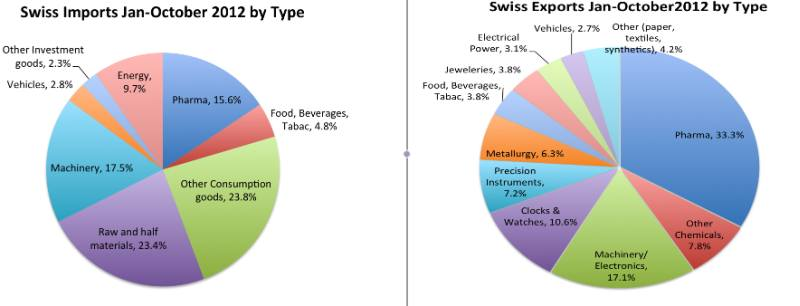
A closer look at the break-down of Imports and Exports by sector provides an additional dimension:-

Swiss-Imports-Exports-by-Type

Source: snbchf.com

The SNB already highlighted the import of energy as a significant factor – Switzerland’s energy bill is now much lower than it was in July 2014. The export of pharmaceuticals has always been of major importance – many of these products are inherently price inelastic, the rise in the currency will have less impact on Switzerland than it might do on other developed economies.

Conclusion and investment opportunities

“The reports of my death are greatly exaggerated.” Mark Twain

Contrary to what several commentators have been suggesting, I do not believe the SNB capitulation marks the beginning of the end of central bank omnipotence – they were never that omnipotent in the first place. The size of the SNB balance sheet is also testament to the limits of QE – if the other G7 central banks expand to 80% of GDP the total QE would more than triple from $10.5 trln to $33.6 trln – and what is to say that 80% of GDP is the limit?

Swiss Markets

Switzerland will benefit from a floating currency in the longer term, although the recent abrupt appreciation may lead to a recession – which in turn should reduce upward pressure on the CHF. Criticism of the SNB for creating greater volatility within the Swiss economy is only partially justified, the excessive rise of the CHF effective exchange rate was due to external factors and the SNB felt it needed to be managed, the subsequent rise in the US$ has brought the CHF back to a more realistic level but the current environment of zero interest rate policy adopted by several major central banks has parallels with the conditions seen after the collapse of Bretton Woods.

I believe the SNB anticipates an acceleration in the long term trend rate of appreciation of the CHF. Swiss exports, even to the US, will be impaired but German imports will be cheaper – with a record trade surplus, this is a good time to start the adjustment of market expectations about the value of the CHF going forward. Swiss companies are used to planning within a framework which incorporates a steadily rising value of their currency – now they must anticipate an acceleration in that trend.

The money and bond markets will remain distorted and, in the event of another EZ crisis, the SNB may increase the penalties for access to the “safe-haven” Switzerland represents: and, as indicated, they may intervene again if the capital flows become excessive. 20 year, or longer, Confederation Bonds, alone, offer positive carry, buying call spreads on shorter maturities is a strategy worth considering.

The SMI Index is likely to lag the broader European market, but negative bond yields offer little alternative to stocks and domestic investors will exhibit a renewed cognizance of the risk of foreign currency investments. The SMI Index, at around 8550, is only 7.6% below the level it was trading prior to the SNB announcement. Swiss stocks will undoubtedly benefit from any export led European economic recovery. Meanwhile, the relative strength of the US economy appears in tact – the Philadelphia Fed Leading Indexes for December – released earlier this week – suggest economic expansion in 49 states over the next six months.

Eurozone Markets

The EZ has already been aided by the departure of its strongest “shadow” member; combined with the ECB’s Expanded Asset Purchase Programme (EAPP) this should drive the EUR lower. European stocks have already taken heart, fuelled by the new liquidity and international competitiveness.

European bond spreads continue to compress. Fears of peripheral countries exiting the single currency area will provide volatility but for the major countries – France, Italy and Spain – any weakness is still a buying opportunity, but at these, often negative real-yields, they should be viewed as a “trading” rather than an “investment” asset.